Arc Mainnet Turns Stablecoin Settlement Into a Routing Test
Arc Mainnet Turns Stablecoin Settlement Into a Routing Test
Circle's Arc mainnet brings native USDC gas, cross-chain interoperability, StableFX, and an expanding set of financial-market integrations into one settlement environment. The next test is route quality: how liquidity moves, how fees behave, and how users reach the right asset across chains.
Arc launches with a settlement stack
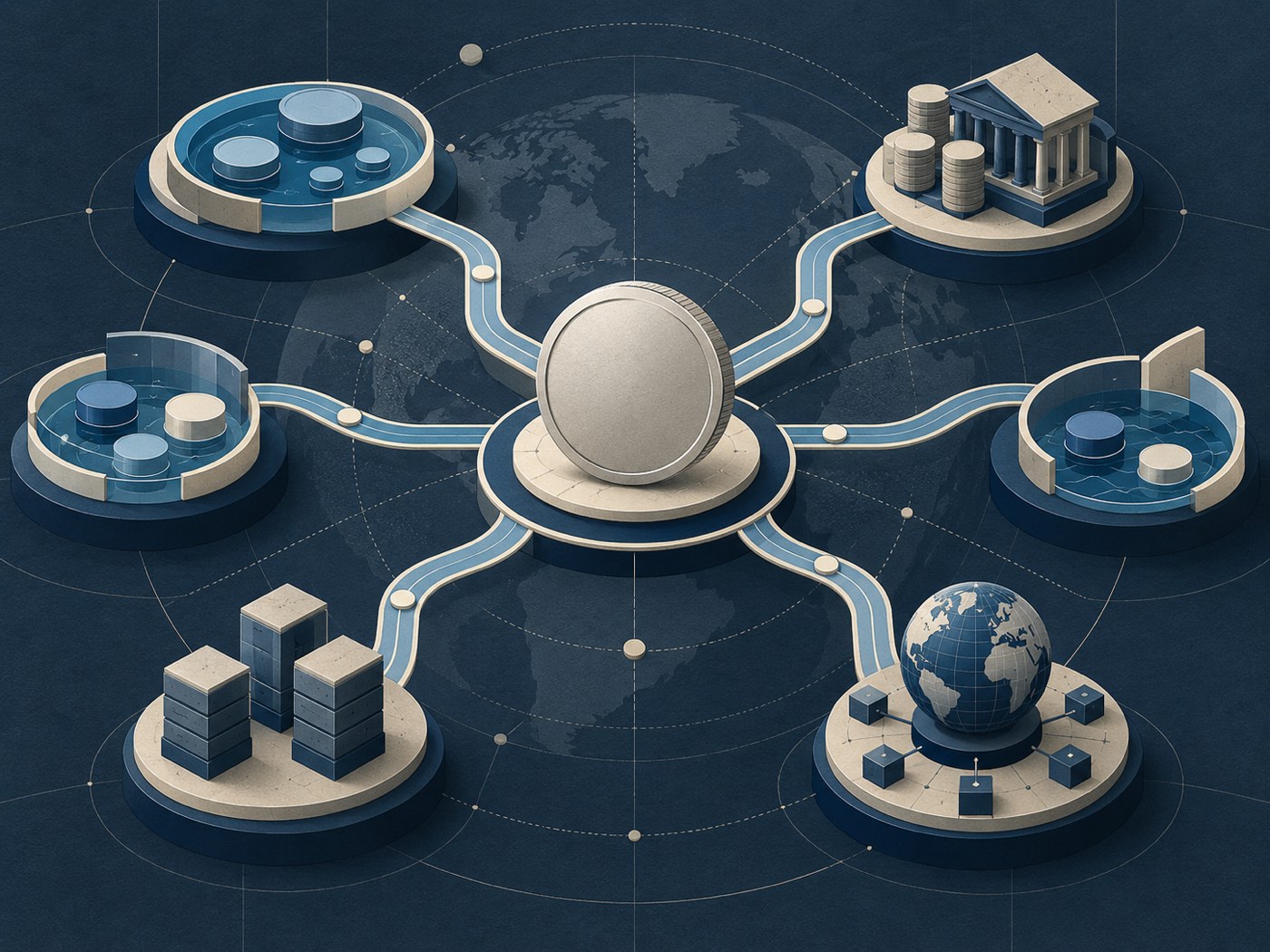
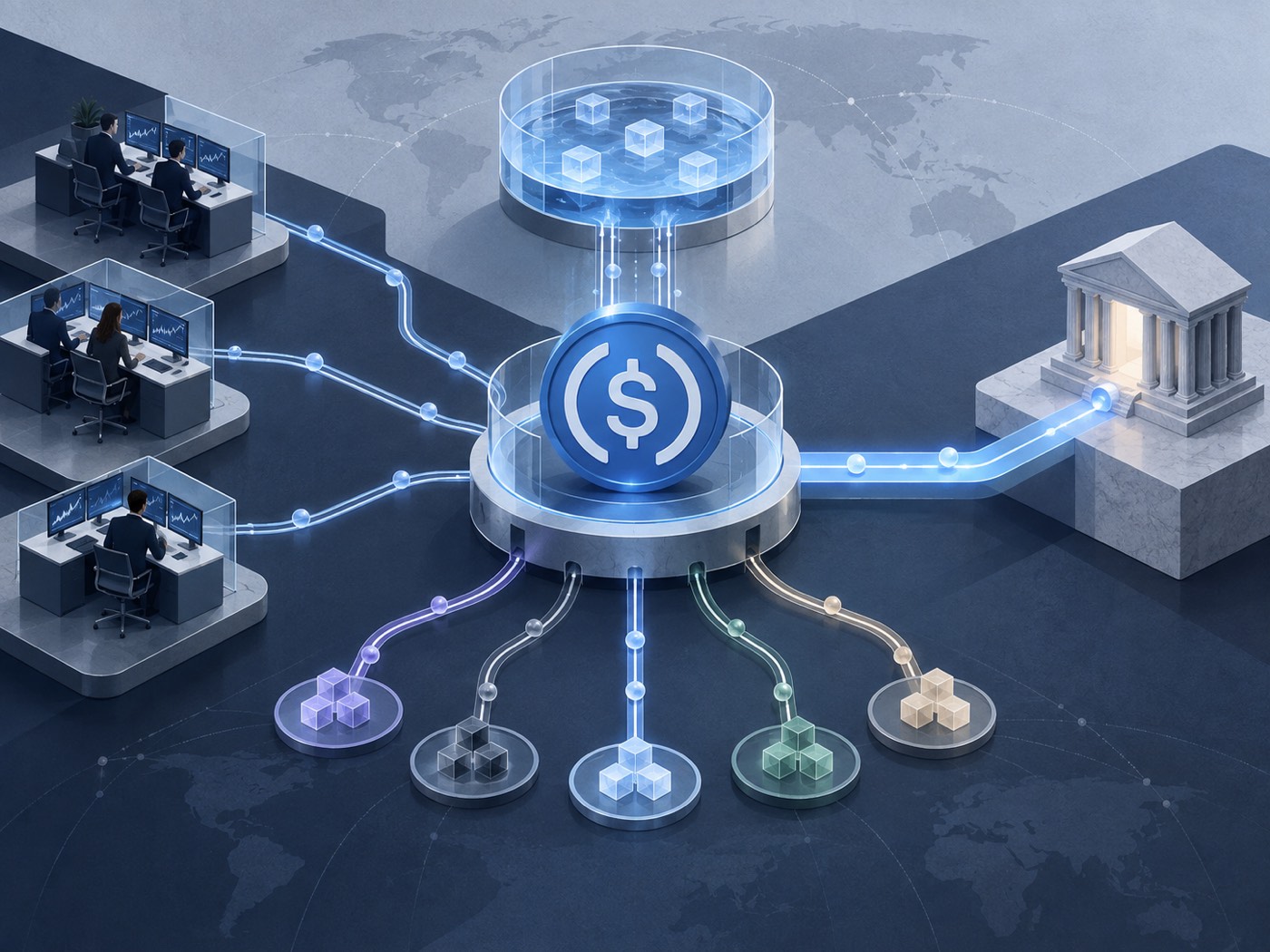
Circle launched Arc mainnet on September 16 with a design aimed at financial markets and internet-native payments. Arc uses USDC as its native gas token, supports institutional validators, and connects to more than 20 blockchains through Circle's Cross-Chain Transfer Protocol and Gateway.
The Arc mainnet announcement describes a network where assets can move quickly, markets can stay open, and settlement can complete in under a second. Its launch surface also includes Circle's Agent Stack, tokenized-fund integrations, programmable wrapped bitcoin, and Arc Portal tools for swapping, lending, borrowing, and agent wallet controls.
Circle's integration and validator announcement lists more than 100 institutional and ecosystem builders around the launch. The group spans infrastructure, exchanges, wallets, payment providers, DeFi protocols, and financial institutions. That breadth creates a useful live environment for studying how stablecoin liquidity travels between products.
Native USDC gas changes the route
Native USDC gas gives every transaction a stablecoin-denominated fee path. A user can budget execution in the same unit used for settlement, and an application can express costs in a familiar accounting asset.
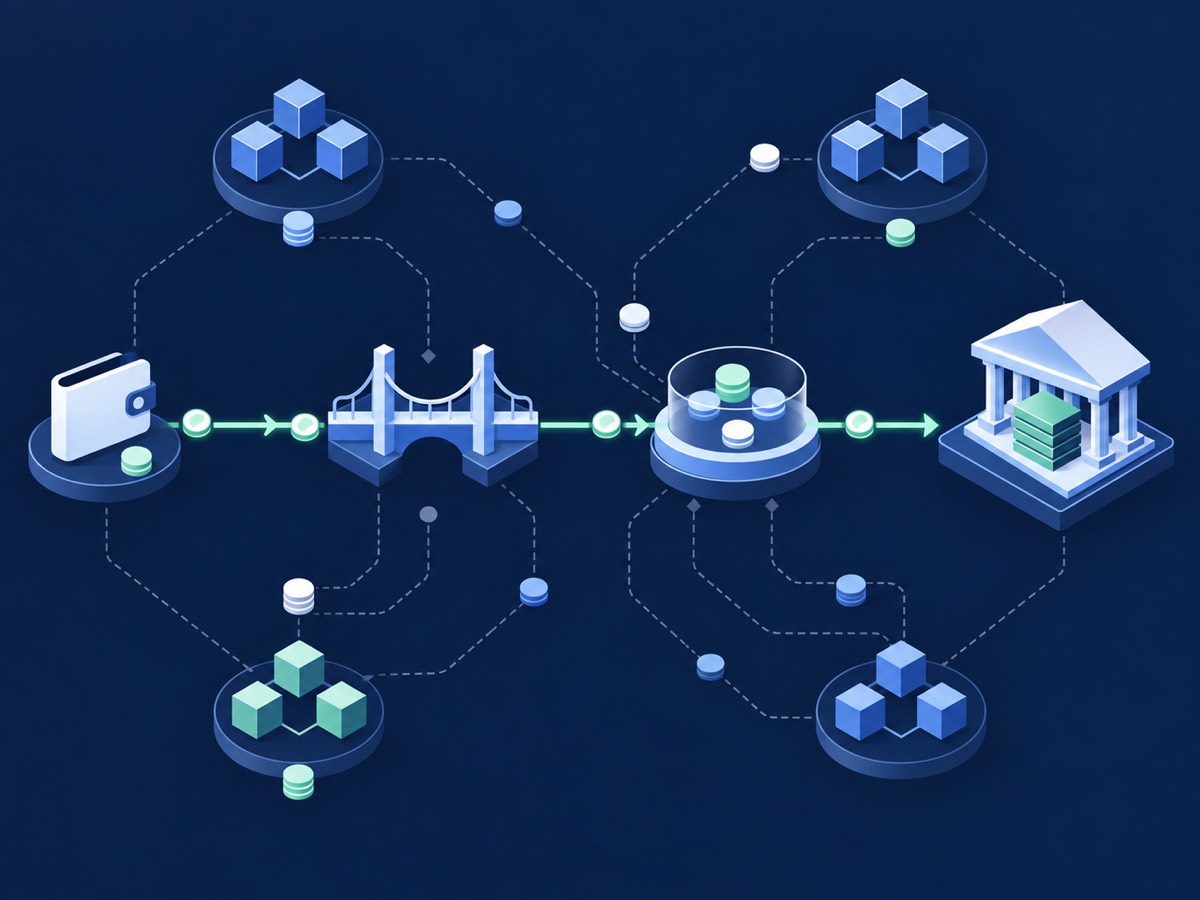
The design also changes the work required before a transaction. A user arriving with another token may need a conversion into USDC for gas. A treasury moving value between networks may hold several stablecoin representations while the destination expects a specific route. An agent wallet may carry USDC while a service requests a different asset or chain.
Each case needs a route decision with four connected fields:
- the asset available at the source
- the asset required at the destination
- the network where execution should happen
- the fee and settlement asset used by the transaction
The fee token removes one source of volatility from gas accounting. Route selection still determines the conversion cost, slippage, bridge path, and time needed to reach the target state.
Interoperability turns a new chain into an execution choice
Circle's CCTP and Gateway extend Arc's reach across more than 20 blockchains. That reach gives a user more ways to fund an Arc transaction and gives applications more ways to distribute liquidity.
The decision can involve a native USDC transfer, a cross-chain mint-and-burn flow, a Gateway balance, or a swap into the required token after arrival. Each path has its own fee model, confirmation sequence, and available liquidity.
A route planner needs to keep those states separate. Source-chain balances, destination-chain liquidity, bridge inventory, and final application settlement each contribute a different part of the execution result. A single headline such as “USDC is available on Arc” leaves the route incomplete until the planner can answer where the USDC starts, how it moves, and what the receiving application accepts.
This is where a cross-chain aggregator can add practical value. It can compare asset representations and execution venues, calculate the full cost, and give a user one plan that reaches the desired destination.
StableFX and Uniswap create complementary paths
An OKX Ventures discussion on X highlighted two pieces of Arc's launch market. Uniswap was available across v2, v3, v4, and UniswapX, while Circle's StableFX aggregated professional liquidity through RFQ for stablecoin FX execution and onchain settlement.
These products serve different route shapes. A DEX path can support permissionless token swaps and programmable liquidity. An RFQ path can return a price from professional liquidity providers for a defined stablecoin conversion. A treasury or application can choose the path that fits size, asset pair, execution certainty, and settlement requirements.
The route record should preserve that choice. It can include the requested amount, quote expiration, pool or liquidity source, fee, price impact, gas budget, and settlement confirmation. The same data helps a user compare routes before signing and helps an operator reconcile the result after execution.

Institutional integrations raise the evidence bar
Arc's initial validator cohort includes names such as BlackRock, DTCC, Galaxy, Global Payments, Mastercard, MoneyGram, SBI Group, Standard Chartered, Sumitomo, and Visa. The launch material also points to Aave, Morpho, Uniswap, FalconX, GSR, Keyrock, and other applications.
Several integrations connect the chain to future tokenization and payment flows. Circle says BlackRock's BUIDL is expected to deploy on Arc, and it describes a DTCC collaboration for tokenized assets held in DTC custody. Payment providers including Rain, Thunes, and Wirex are positioned to route real-world stablecoin payment and settlement activity through the network.
This lineup gives Arc a broad starting market. It also makes route evidence more important. Institutional settlement needs clear asset identity, approved destinations, predictable costs, and a confirmation record that can feed treasury and compliance processes.
The application layer can expose those properties through simple user-facing fields:
- source and destination network
- stablecoin representation
- quote and execution venue
- bridge or interoperability step
- gas asset and estimated fee
- expected confirmation state
- transaction hash and reconciliation status
Volume headlines still need route context
Current X discussion is already asking how early Arc activity should be interpreted. One thread focused on launchpad activity and the gap between a busy first week and deeper financial-market usage. Another recent discussion identified liquidity routing, stablecoin settlement, and cross-chain execution as the infrastructure questions that will shape Arc's ecosystem.
Those questions lead to better metrics than raw transaction count. A route-quality view can measure successful completion, total cost, slippage, time to final settlement, liquidity depth, bridge utilization, and the number of recovery actions required when a path changes.
That data separates a route that produces visible activity from a route that consistently delivers the right asset to the right application. It also shows where user friction remains: an expensive source swap, an underfunded destination, a long confirmation window, or a fee conversion that the interface hid.
A routing checklist for Arc flows
Teams evaluating Arc can start with a compact execution checklist:
- Define the destination state. Name the chain, asset representation, amount, recipient, and application action that must complete.
- Inventory the source. Record the user's balance, wallet policy, approved networks, and available gas asset.
- Compare settlement paths. Evaluate native transfer, CCTP, Gateway, DEX, and RFQ options when each is available.
- Price the whole route. Combine swap fees, bridge costs, gas, slippage, and any liquidity-provider spread.
- Set a confirmation rule. Specify the event that releases the next application action and the fallback when that event is delayed.
- Save the evidence. Keep the quote, selected route, transaction hash, final balances, and application receipt together.
The checklist works for a single user swap and for a treasury workflow moving stablecoins between venues. It also gives an agent a bounded decision process that can be audited after execution.
OneSwap connects the route decision to execution
Arc's launch shows how quickly stablecoin infrastructure can assemble across a new network. Users still experience the market through concrete decisions about assets, chains, fees, liquidity, and settlement state.
OneSwap focuses on that decision layer for cross-chain token movement. A useful route starts with the user's target outcome, compares the available execution paths, and keeps the final transaction evidence attached to the result. That approach gives stablecoin settlement a practical operating loop from quote to confirmation.
As Arc's integrations mature, route quality will become easier to observe. The strongest signal will come from repeatable flows that move value across chains, reach the intended application, and show their full cost and settlement status.
Explore the route layer at oneswap.ai.
Artículos relacionados

Tokenized Stocks Are Entering DeFi Collateral, So Routes Need Market-Hour Context

USD1's Mesh Expansion Shows Why Stablecoin Routing Must Follow the User