Stablecoin Payment Rails Are Reaching Wallets. Route Quality Decides What Users Receive
Stablecoins are moving closer to the places where people actually spend and receive money. The next product question is the route between a digital balance and the asset a user can use.
Stablecoin infrastructure is reaching more payment endpoints. Recent X activity highlighted Western Union’s Visa-backed wallet and card launch across 37 markets, using its USDPT stablecoin on Solana. Visa is also documenting stablecoin prefunding and payouts through Visa Direct. These moves connect onchain value to cards, wallets, merchants, and cross-border recipients.
The shift changes what a stablecoin product needs to explain. A user may see one dollar balance, while the execution path can involve a source chain, a settlement asset, a bridge, a liquidity venue, a destination wallet, and a local payout rail. The amount that arrives, the time it takes, and the asset the recipient can spend all depend on that route.
Stablecoins Are Moving Closer To The Spend Layer
Western Union’s USDPT materials describe a dollar stablecoin issued by Anchorage Digital Bank on Solana. The same product direction includes exchange access, cash-out through Western Union’s Digital Asset Network, a self-custody wallet, and a Visa payment card for spending at Visa merchants.
The recent Cointelegraph post on X put the commercial signal into a single update: a wallet, a card, 37 markets, and a stablecoin running on a public chain. That combination gives the asset a consumer endpoint and a global distribution story. It also exposes the execution work between holding a token and using it in a payment.
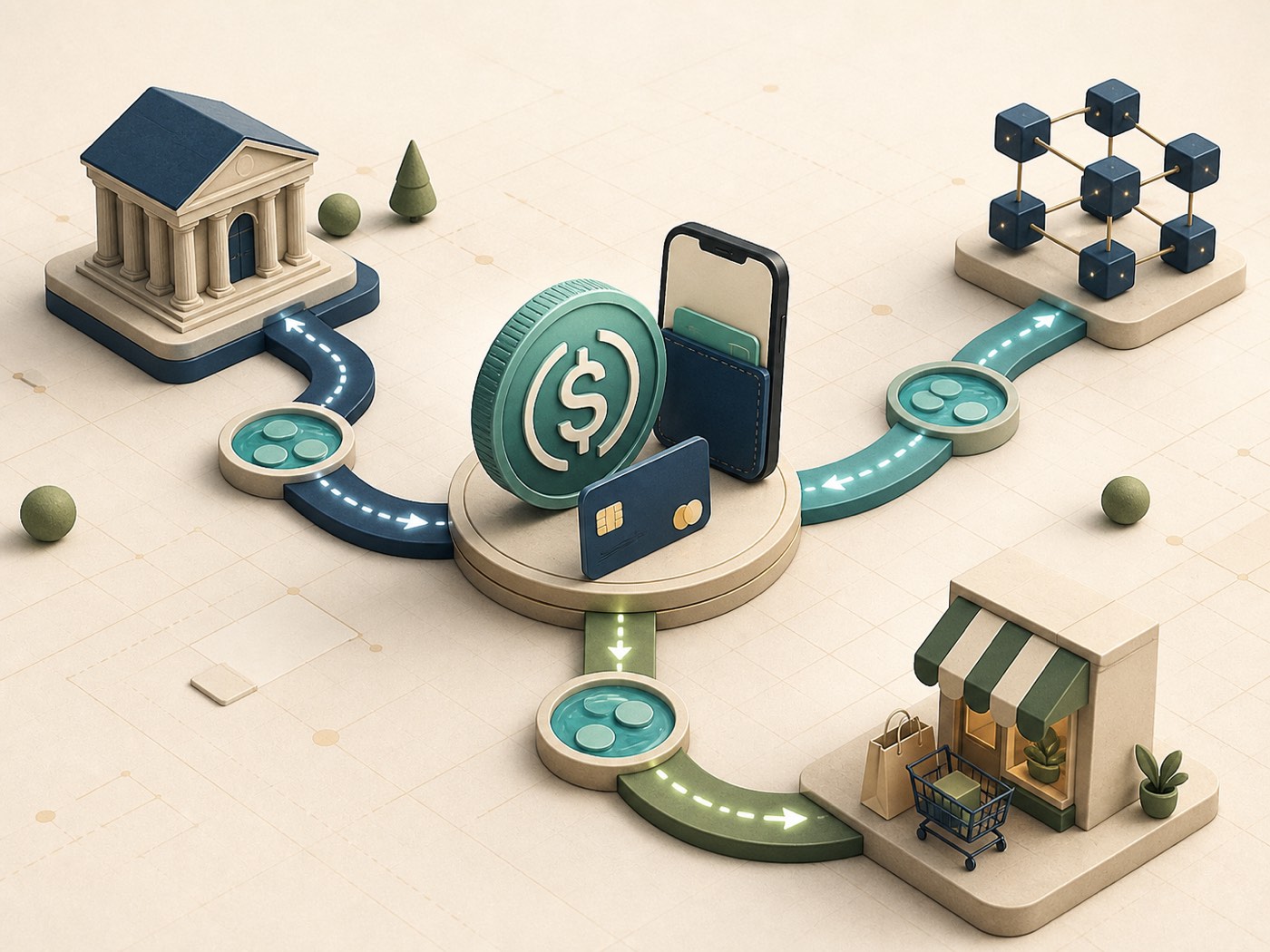
Visa’s stablecoin payment materials describe a related path for businesses. Eligible clients can prefund Visa Direct using stablecoins, while recipients can receive payouts into stablecoin wallets. The flow can begin with a fiat balance, move through a stablecoin platform, and finish in a wallet that supports digital dollars.
These are different products with a shared direction. Stablecoins are being connected to payment acceptance, treasury funding, exchange liquidity, and local cash access. Each connection adds reach. Each connection also adds a route decision.

A Wallet Is One Part Of The Route
A wallet address can make a payment flow look simple. The underlying path may contain several stages:
- Source balance: The sender starts with fiat, a stablecoin, or another crypto asset on a specific network.
- Settlement asset: The flow selects USDC, USDPT, another stablecoin, or a chain-specific representation of dollar value.
- Network movement: The asset stays on its source chain, crosses a bridge, or moves through an interoperability protocol.
- Conversion venue: A DEX pool, order book, RFQ provider, or liquidity network supplies the next asset.
- Destination wallet or card: The recipient receives an asset that must be supported by the destination product.
- Local access: The user may spend through a card, hold the balance, withdraw local currency, or send a new payment.
The user experiences one transfer. The system manages multiple balances, venues, confirmations, and operational states. A route that looks cheap at the source can produce a worse result after conversion fees, network costs, bridge charges, spread, and destination handling are included.
This makes the destination asset important. A stablecoin balance has practical value when the recipient can hold it, spend it, exchange it, or redeem it through an available rail. The route needs to optimize for that usable outcome rather than a single intermediate quote.
Cross-Chain Payment Products Need Liquidity Choices
Stablecoin activity is distributed across networks. The same ticker can have different depth, transfer rules, redemption access, and execution quality depending on the chain and venue.
Visa’s cross-border stablecoin analysis describes prefunding, liquidity management, and cross-border payouts as connected operating questions. A business that can fund a payout in stablecoins still needs a way to choose the asset, network, and provider that will deliver the required result.
For a user, the important comparisons include:
- native assets versus wrapped or bridged representations
- source-chain liquidity versus destination-chain liquidity
- conversion fees versus network and service fees
- confirmation time versus local payout time
- quoted output versus net amount received
- direct liquidity versus a path with multiple hops
When a payment product expands to more chains, the route set grows faster than the number of assets shown in the interface. A route-aware product can keep the interface simple while exposing the execution details that affect the result.
The Quote Needs To Describe The Outcome
A quote is useful when it answers the question the user actually has: what will arrive, where will it arrive, and when can it be used?
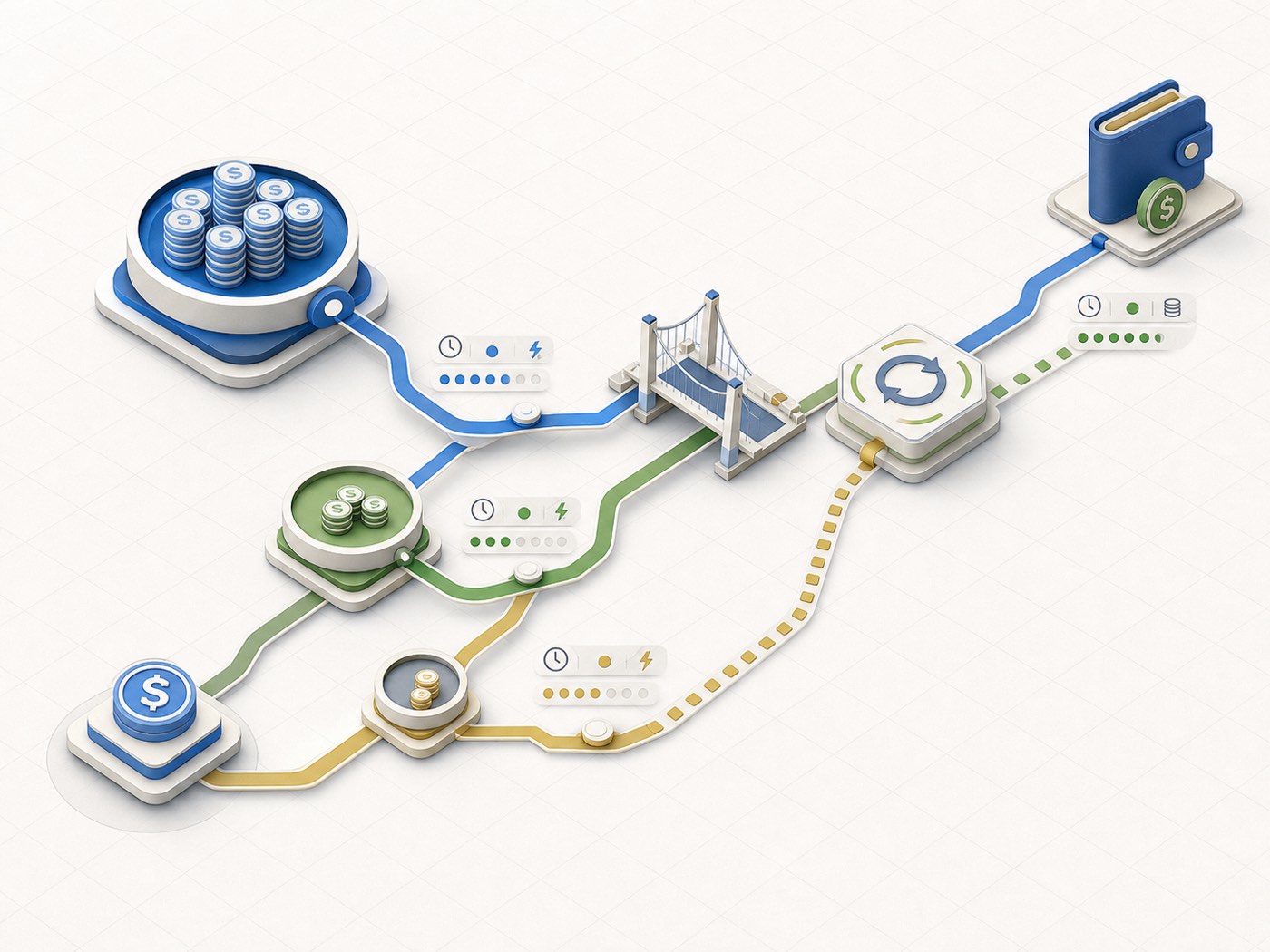
That requires more than a token amount. A clear route view can show:
- The complete path: source asset, source chain, conversion step, settlement chain, destination asset, and payment rail.
- Net received amount: exchange rate, slippage, gas, bridge fees, service charges, and payout costs combined in one outcome number.
- Timing by stage: swap execution, cross-chain finality, compliance review, and card or cash availability shown separately.
- Liquidity context: the venue supplying the route, available depth, and the point where price impact becomes material.
- Fallback options: a second route or a clear action if a pool changes, a chain slows down, or a provider becomes unavailable.
This structure supports both consumer payments and business treasury flows. It gives a person confidence before moving a balance and gives an operator a clearer way to compare routes across markets.
Route-Aware UX Becomes Part Of The Payment Product
Stablecoin payment products are becoming easier to access through familiar endpoints. Cards, wallets, exchanges, and payout APIs bring onchain value closer to daily use. The user-facing product still needs to make the route legible.
The strongest experience will connect four layers in one view:
- Asset: what the user holds and what the recipient will receive
- Network: where the asset settles and how it reaches the destination
- Liquidity: which venue provides the conversion and at what depth
- Access: how the recipient spends, holds, exchanges, or cashes out
This is where payment infrastructure meets swap infrastructure. The interface can be simple while the route model remains detailed. Users should be able to compare the result, timing, costs, and operational conditions before they commit.
Why This Matters For OneSwap Users
Stablecoin wallets, cards, and payout rails are creating more ways to move value across borders and applications. Every new endpoint increases the number of routes a user can take.
OneSwap helps users compare cross-chain swap paths, see how liquidity and fees affect the result, and choose a route that matches the asset they want to receive. As stablecoins move closer to everyday payments, route clarity becomes part of the product experience.
Explore clearer cross-chain swaps at OneSwap.ai.
Articles connexes

Tokenized Stocks Are Entering DeFi Collateral, So Routes Need Market-Hour Context

USD1's Mesh Expansion Shows Why Stablecoin Routing Must Follow the User