
Chainflip's Safe Mode Shows Why Route Status Belongs in Every Cross-Chain Quote
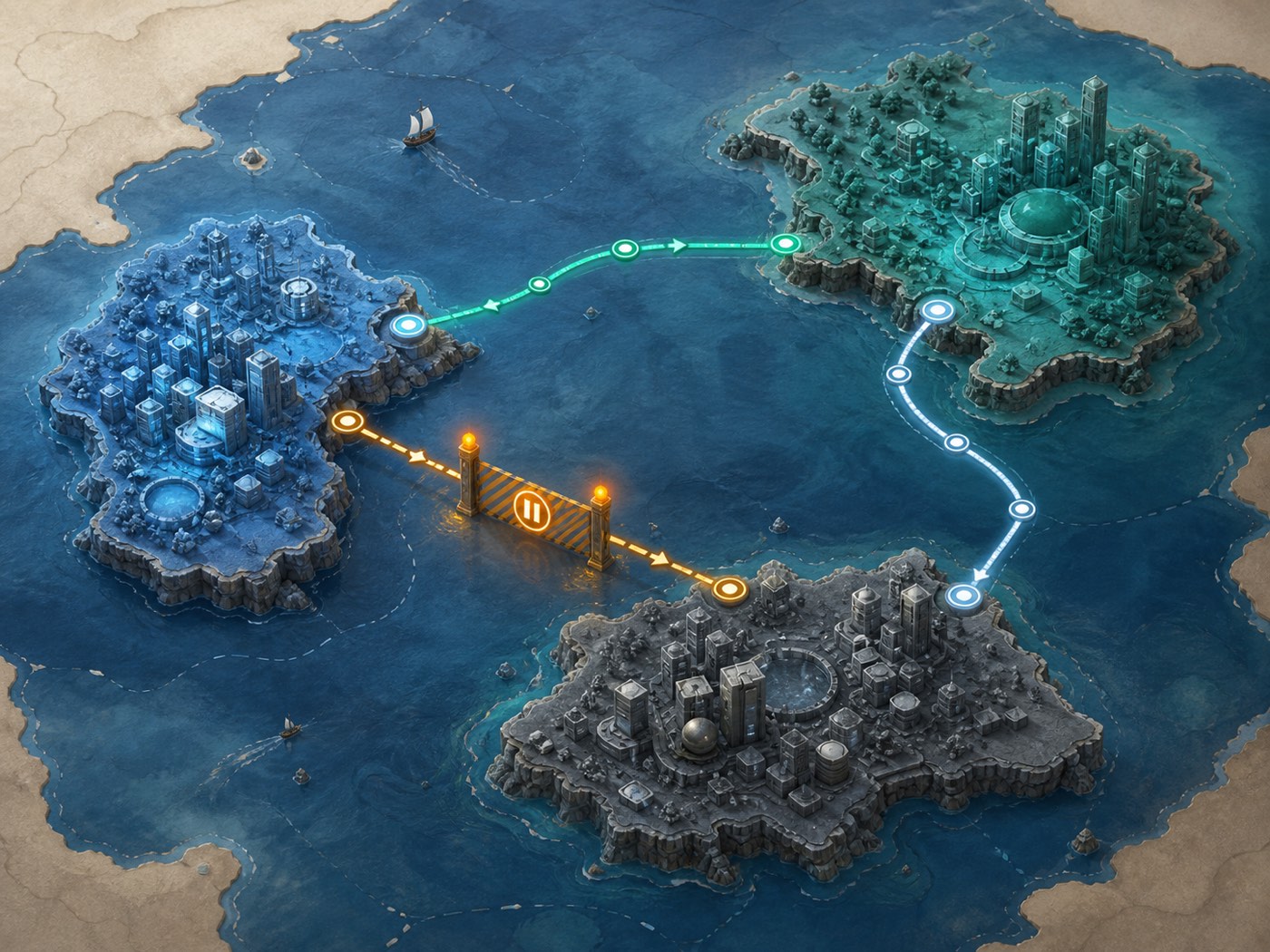
When a cross-chain protocol pauses deposits and quoting to contain an exploit, every route needs a live status signal before it sends another user toward that venue.
Chainflip published an update on August 24 after containing an attempted exploit aimed at cross-chain messaging and refund logic on Ethereum. The protocol reported no lost user funds, paused deposits and quoting on Ethereum with Arbitrum and Tron also paused as a precaution, and restored the network after shipping a fix through a network upgrade.
The incident makes a practical routing issue visible. A venue can protect funds, recover held swaps, and still be temporarily unavailable for new execution. A cross-chain router needs to represent those states clearly so a user receives a route that can actually accept, settle, and complete the swap.
A safety pause changes the meaning of route availability
Chainflip said it enabled safe mode within minutes of identifying the issue. Deposits and quoting paused while the team investigated. The fix took roughly 24 hours from the first report to completion. Held swaps were then processed automatically or refunded, while quoting would return after the backlog cleared. The protocol treated containment, recovery, and fresh quoting as separate operational stages.
That sequence matters to route selection. A quote can describe a valid path while the path is temporarily closed to new deposits. A destination can remain solvent while payout processing waits for a protocol upgrade. A network can be online while its quoting service is still rebuilding a backlog.
Users experience these states as very different outcomes:
- a route that accepts a deposit and completes normally
- a route that accepts an existing swap while rejecting new deposits
- a route whose funds are safe while settlement waits for recovery
- a route that has returned to service but has limited capacity during backlog clearance
One availability label hides too much of the execution state.
Cross-chain risk appears inside the message and refund path
Chainflip described the attempted exploit as targeting cross-chain messaging and refund logic on Ethereum. Those components connect external-chain events, the protocol's accounting state, and the path that returns funds when a swap cannot complete.
This is the part of a route that users rarely see in a headline quote. They see an input asset, an output asset, an exchange rate, and an estimated fee. The route also depends on how a protocol recognizes a deposit, authorizes a payout, handles a failed transfer, and returns funds after a pause.
Chainflip's network incident update says the response paused affected functions, kept funds secure, shipped a fix, and restored processing for held swaps. Its governance and security documentation describes Safe Mode as a chain state that can halt critical functions while validators and developers analyze an incident and deploy a runtime upgrade.

Route engines need more than a fresh price
A robust quote should carry operational context alongside price and fee data. Before a route is shown as executable, a router should check:
- whether deposits are enabled on the source chain
- whether quoting is active for the requested asset pair
- whether the destination payout path is processing normally
- whether a bridge, message layer, or vault is in a paused state
- whether a backlog changes the expected settlement time
- whether refunds have a defined processing state and fee
- when the status was last checked
These fields turn a vague route health flag into an execution contract. The router can remove a paused route from the default choice, show an existing-swap-only state, or present a recovery estimate when the user is already waiting on a submitted swap.
The same model helps with normal congestion. A route with active quoting and a ten-minute settlement queue deserves a different treatment from a route with disabled deposits. A route with a stale status timestamp needs a different treatment from one whose provider has just confirmed recovery.
Safe mode protects value while execution pauses
Chainflip's documentation gives Safe Mode a useful product meaning. The protocol can continue producing the state needed for governance and fixes while sharply reducing other functions. In its full red mode, swap payouts, liquidity-provider withdrawals, and other core actions are suspended until the network exits the state.
For a route aggregator, this creates two separate questions:
- Are funds protected while the protocol investigates?
- Can a new user start and finish this route right now?
The first question belongs to risk monitoring. The second belongs to route availability. A high-quality user interface should surface both without collapsing them into a single green or red badge.
This distinction also helps liquidity providers and integrators. LPs can understand why capital remains secure while flow is paused. Wallets and applications can stop initiating new deposits without mislabeling every held swap as a loss. Support teams can explain whether the user should wait, expect an automatic payout, or receive a refund.
A better route status is specific and time-bound
Cross-chain users need route states that describe the next action. A practical status model could include:
Available
Quotes, deposits, settlement, and payouts are active. The router can include the path in its normal comparison set.
Quotes paused
The provider has stopped creating new routes. The router should prevent new initiation and preserve the reason with a timestamp.
Existing swaps settling
Previously submitted swaps are moving through recovery. The interface should show the expected queue behavior and avoid creating duplicate deposits.
Refunds processing
The protocol has a defined return path for held or failed swaps. The router should show the refund state and any applicable fee instead of presenting a new quote.
Upgrade or recovery in progress
The provider is applying a fix or clearing a backlog. The route can remain visible for monitoring while staying out of the executable set.
The user does not need every internal detail. The user needs a current status, the last check time, and the action that matches that status.

The commercial value of route context
Stablecoin and native-asset swaps increasingly span chains with different gas markets, liquidity pools, message systems, and operational controls. A familiar token symbol does not describe the complete execution path. The route's current provider state matters just as much as the nominal exchange rate.
For an application integrating swaps, this context reduces failed deposits, duplicate retries, support tickets, and surprise delays. For a user comparing routes, it explains why a slightly more expensive path may be the better decision when its settlement state is clear and active.
For an aggregator, live status becomes part of product quality. The routing layer can combine asset identity, source and destination support, price impact, network fees, provider health, and recovery state in one decision surface.
OneSwap makes route status part of the decision
OneSwap gives users a way to compare cross-chain execution around assets, networks, liquidity, fees, and slippage. The same route view should also answer whether a provider is accepting new flow, settling existing swaps, or recovering from a pause.
Chainflip's incident shows the value of a controlled stop and a clear recovery path. The next step for cross-chain routing is making those operational states visible before a user signs a deposit.
Explore smoother cross-asset execution at OneSwap and review the route details before you confirm a swap.