
Bitcoin at $71K After the Hormuz Shock: Why Fast Non-Custodial Swaps Matter More in Risk-Off Markets
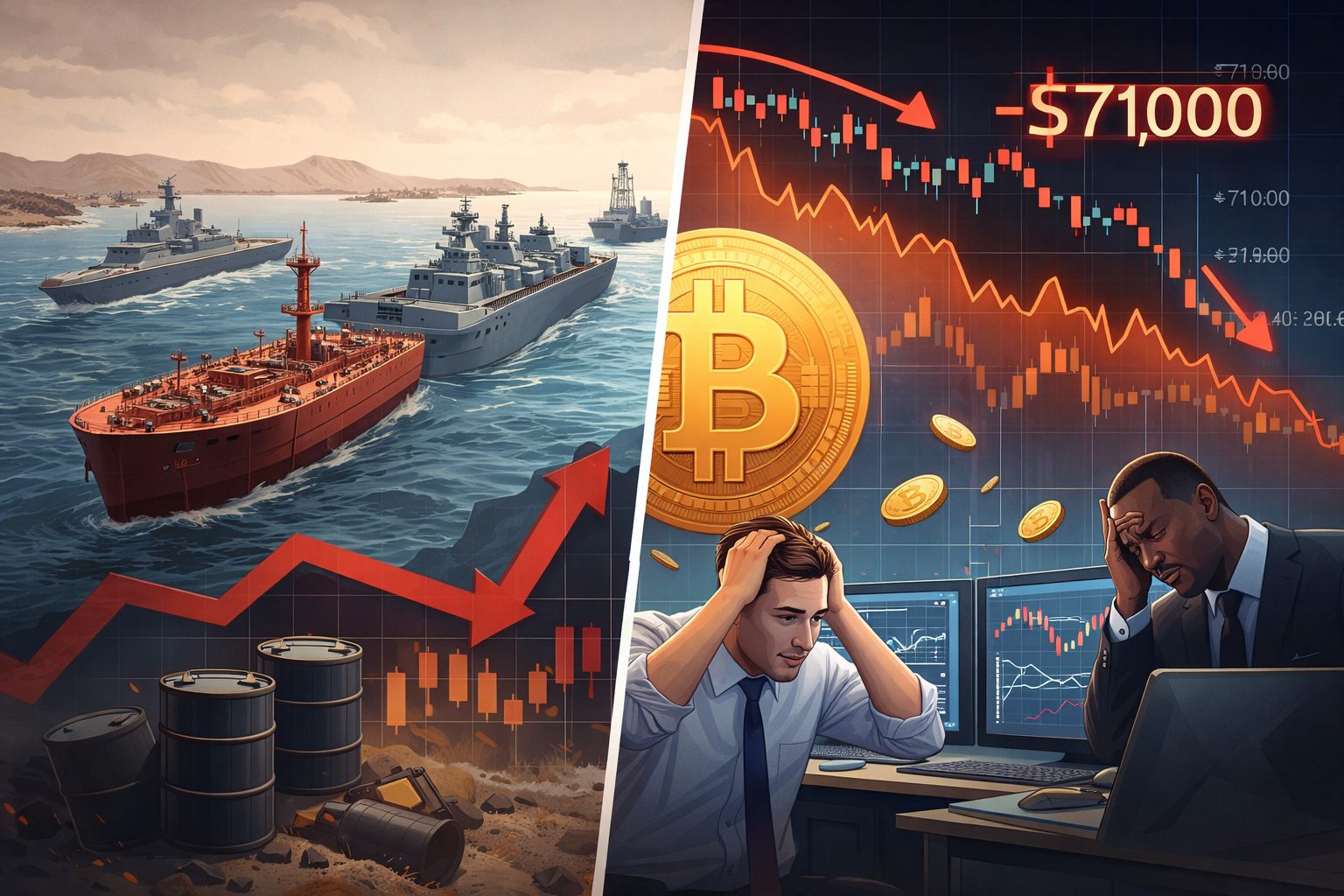
Bitcoin’s slide toward $71,000 after the Strait of Hormuz blockade shows how quickly macro shocks can spill into crypto. In moments like this, traders do not just need market insight. They need faster, simpler, non-custodial execution.
Bitcoin at $71K After the Hormuz Shock: Why Fast Non-Custodial Swaps Matter More in Risk-Off Markets
When crypto traders talk about volatility, they often mean token-specific catalysts: ETF flows, liquidation cascades, whale transfers, or altcoin rotations. But over the last two days, the story on X has been different.
A surge of posts around Bitcoin falling toward the $71,000 area after the Strait of Hormuz blockade turned a geopolitical headline into a crypto market stress test. The move was not just about Bitcoin. It was about what happens when a global macro shock hits risk assets all at once.
On X, the topic gained traction as traders and news accounts tied the market drop to the renewed Middle East escalation, the blockade announcement, and the resulting move in oil. The tone across crypto Twitter was clear: this was a classic risk-off repricing, not an isolated crypto narrative.
The Hot Story on X: Bitcoin Weakens as Geopolitics Hit Risk Appetite
One of the clearest summaries came from crypto media and trader commentary circulating on X on April 12 and April 13, 2026. The core thread was consistent:
- U.S.-Iran talks failed to produce a resolution
- A blockade order around the Strait of Hormuz intensified fears of escalation
- Oil surged sharply above recent levels
- Bitcoin lost momentum and slid back toward the low $71,000 range
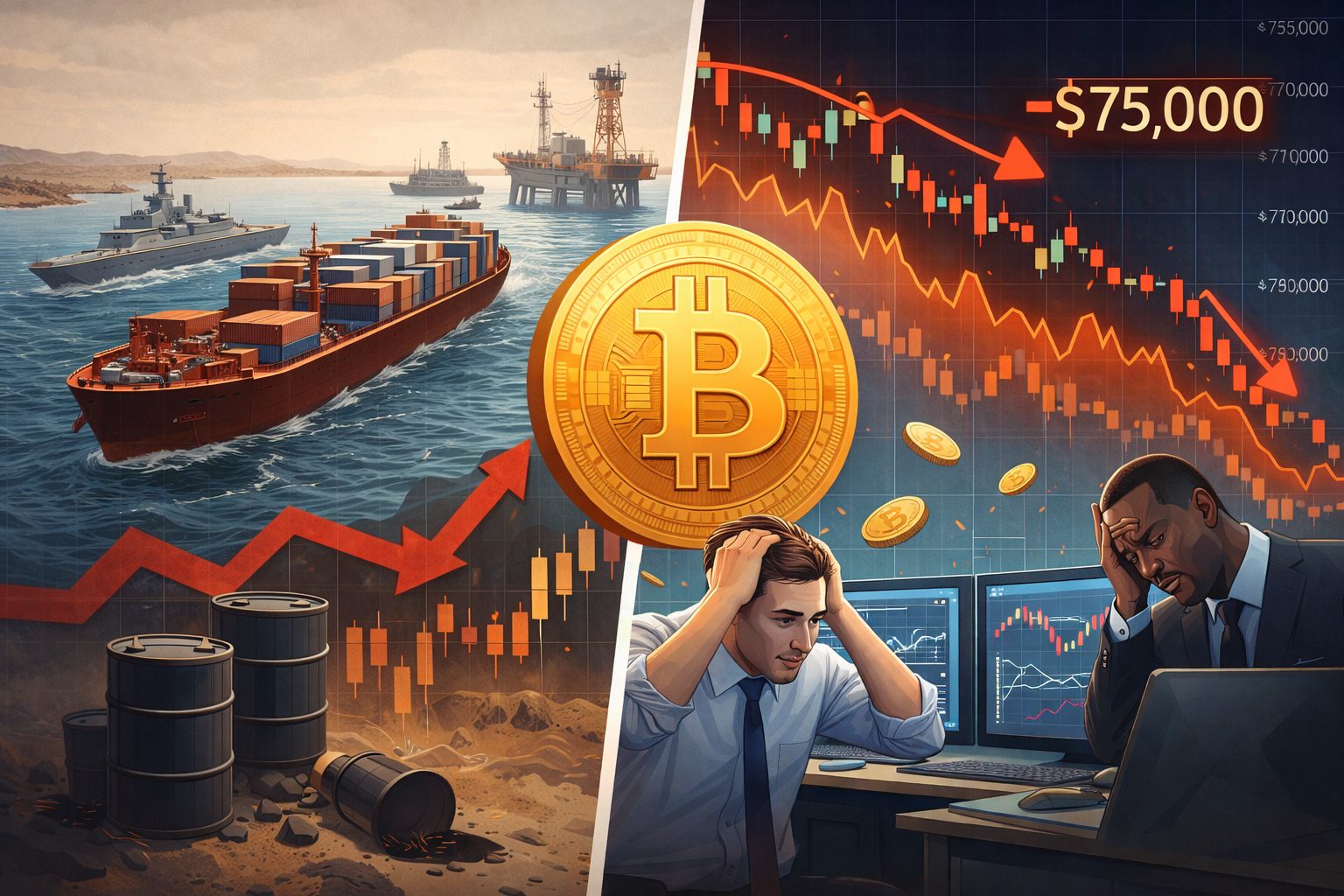
Reporting picked up the same pattern. The Block reported that Bitcoin fell to roughly $71,093 late on April 12, 2026, after the blockade order and failed negotiations, while noting that the broader crypto market also moved lower. At the same time, broader market coverage showed crude oil pushing above $100 per barrel, reinforcing the inflation and growth fears that often pressure risk assets.
That matters because Bitcoin is still treated by many participants as a liquid macro asset during stress events. When traders cut exposure quickly, crypto can trade less like a separate financial universe and more like a high-beta expression of global sentiment.
Why This Drop Matters More Than a Simple Pullback
It is easy to look at a 2% to 3% move in Bitcoin and call it noise. But this episode matters for a deeper reason.
It shows how fragile execution becomes when markets are moving fast and attention is fragmented across multiple chains, assets, and venues.
In a macro-driven sell-off, users often need to do one of four things quickly:
- Rotate from one major asset into another
- Move from volatile assets into stablecoins
- Reposition across chains where liquidity looks better
- Reduce friction while avoiding unnecessary custody risk
That sounds simple in theory. In practice, it is still messy.
Centralized exchanges can bottleneck during major news events. Deposits and withdrawals create delay. KYC, internal queues, and platform risk all become more visible when speed matters most. On the decentralized side, users often face a different problem: too many routes, too many bridges, too much fragmentation, and too much guesswork.
The Real Dilemma: Control vs Convenience
This is the dilemma crypto still has not fully solved.
Users want the speed and simplicity of a centralized exchange, but they do not want to give up control of their assets.
At the same time, they want the flexibility of DeFi and cross-chain liquidity, but they do not want to manually compare routes, bridge paths, fees, and slippage every time the market turns.
In calm conditions, traders tolerate this inefficiency. In a headline-driven panic, they do not.
That is why stories like the Bitcoin-to-$71K drop matter beyond the price chart. They expose the operational gap in crypto infrastructure. When global risk hits, the winning products are not just the ones with liquidity. They are the ones that help users act fast without adding complexity.
Why Non-Custodial Execution Becomes More Valuable in Volatile Markets
A fast market punishes hesitation. It also punishes poor tooling.
If your only option is to send funds to a centralized venue and wait, you lose time. If your only option is to manually stitch together on-chain paths, you lose clarity. If you are forced to choose between convenience and self-custody, the product experience is still broken.
This is where non-custodial swap infrastructure becomes more than a philosophical preference. It becomes a practical trading advantage.
The best tools in this environment should help users:
- stay in control of assets
- avoid unnecessary KYC friction
- access better routes across fragmented liquidity
- reduce guesswork during volatile conditions
- complete swaps with as little operational drag as possible

Where OneSwap Fits In
This is exactly the kind of environment where OneSwap becomes relevant.
OneSwap is built for users who want the best of both worlds: the control of non-custodial crypto and the smoother execution experience people usually associate with centralized platforms.
Instead of forcing users to manually hunt for routes across a fragmented market, OneSwap uses AI-powered routing to help find efficient swap paths across available liquidity. That matters when the market is moving quickly and every extra click, delay, or pricing mistake can cost real money.
For users reacting to events like the latest Bitcoin sell-off, that means a simpler path to action:
- Non-custodial by design so you keep control of your funds
- No KYC friction for users who want a faster experience
- AI route discovery to reduce manual comparison and decision fatigue
- Cross-chain flexibility when liquidity and opportunity are scattered
- Cleaner execution when markets are volatile and speed matters
Final Take
The latest Bitcoin move toward $71,000 is a reminder that crypto does not trade in isolation. Geopolitical shocks, oil spikes, and broad risk repricing still matter.
But these events also highlight a more practical truth: when markets turn fast, users need better execution infrastructure, not just better commentary.
That is the opportunity for products like OneSwap. In a fragmented market, the value is not only finding the right trade. It is being able to make it quickly, simply, and without giving up custody of your assets.
If you want a faster, smarter, non-custodial way to swap during volatile markets, try OneSwap.