
Stablecoin Corridors Are Spreading. Route Orchestration Is The Next Bottleneck
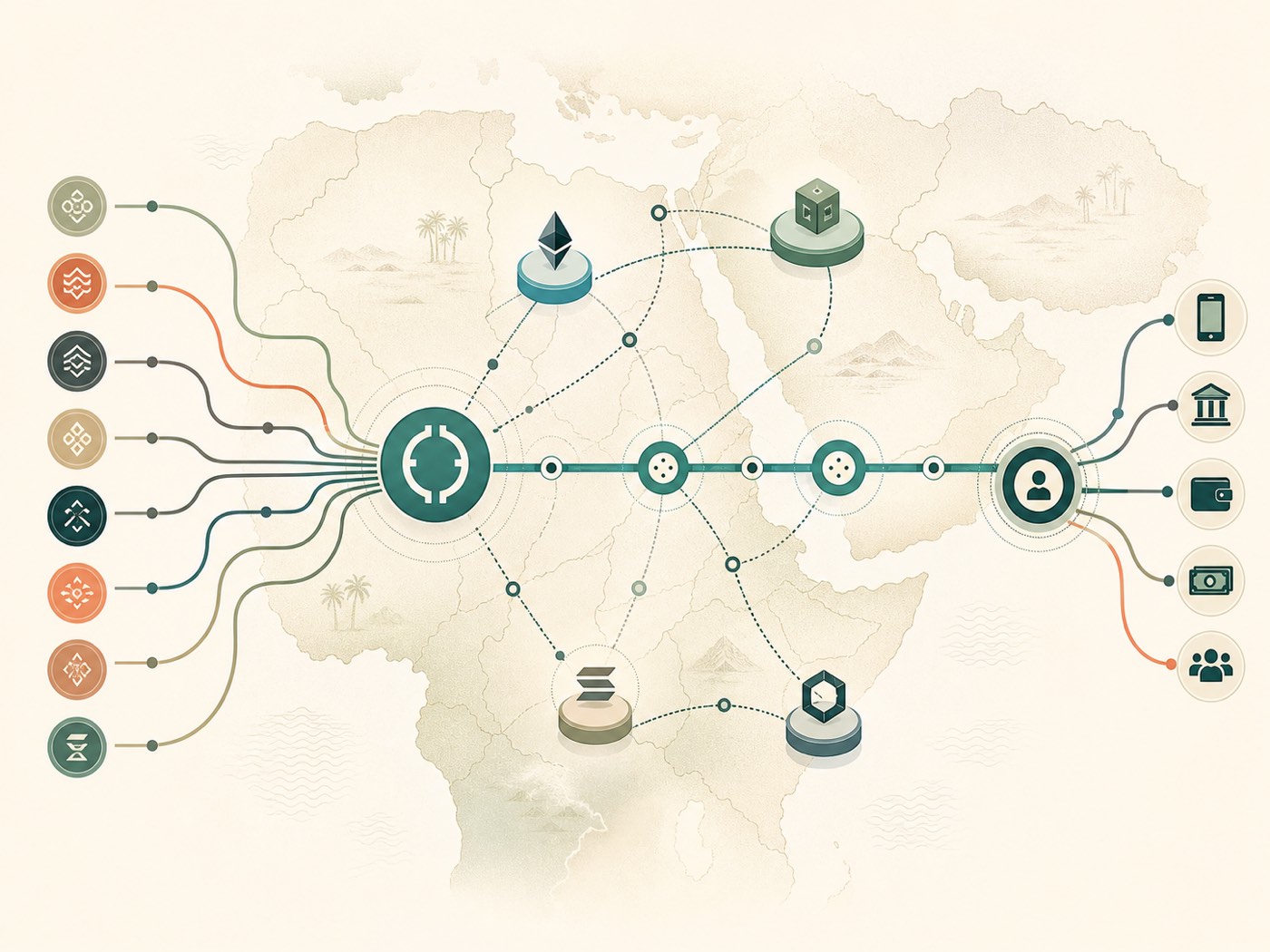
Stablecoin payment corridors are moving from isolated pilots into a connected network of local payout rails, blockchains, and liquidity venues. The product challenge now sits in the route between a sender’s balance and a recipient’s usable currency.
Stablecoin settlement is showing up in more commercial workflows, across more regions, and through more blockchain networks. The latest X conversation brought that expansion into focus. Aptos highlighted a regulated MENA to Africa B2B stablecoin corridor involving HashKey MENA and Daya, while broader market posts connected stablecoins with institutional settlement, RWA infrastructure, and cross-chain liquidity.
This creates a practical product question: how does a user or business choose the right path when the payment may touch several currencies, chains, liquidity sources, and payout systems?
Stablecoin Corridors Are Becoming Real Payment Products
On August 2, the official Aptos account resurfaced the MENA to Africa corridor pilot announced by Daya and HashKey MENA. The post said Daya and HashKey MENA are building a regulated B2B stablecoin payments corridor, with Aptos providing the settlement network. It also noted Daya’s $2.4 million raise and the participation of Aptos Foundation. The Aptos post drew more than 36,000 views when captured.
The underlying announcement from HashKey MENA describes a pilot connecting businesses across the Middle East and Africa. The design includes Nigerian naira and other African currencies, local virtual accounts, on and off ramps, SWIFT, bank wires, and payment APIs. That is a full commercial workflow with digital settlement inside a wider fiat network.
Other recent infrastructure moves point in the same direction. Circle and Nium connected USDC settlement with local payouts across more than 190 countries. Visa and Brale announced a stablecoin settlement proof of concept on Canton Network for institutional payment flows.
These examples have different structures and operators. Together, they show stablecoins becoming part of payment orchestration, treasury movement, and regional liquidity distribution.

A Payment Corridor Contains Several Route Decisions
A corridor sounds like a direct line between two markets. The actual execution path contains several decisions:
- Origin currency: The sender may begin with a bank balance, an exchange balance, or a stablecoin on a specific chain.
- Settlement asset: The route may use USDC, another stablecoin, a tokenized deposit, or a chain-specific representation of a dollar asset.
- Network selection: Each chain brings its own fees, confirmation behavior, wallet support, liquidity, and operational assumptions.
- Conversion venue: The route may rely on an order book, an AMM pool, an RFQ provider, or a liquidity network.
- Local payout: The recipient may need a bank transfer, a local currency balance, or a supported wallet asset.
- Reconciliation and controls: A business flow also needs payment references, compliance checks, settlement status, and a recovery path.
A business payment can begin in one local currency, convert into a stablecoin, settle on a chain, move through a liquidity venue, and end in another local currency. Every transition affects the amount received and the time required. The user experience needs to express the entire route clearly.
This is where payment infrastructure and swap infrastructure meet. A company can call the flow a payout, a treasury transfer, or a settlement instruction. If the path converts assets or crosses networks, route quality still determines the outcome.
One Stablecoin Ticker Can Hide Several Markets
Stablecoins are portable across chains, yet liquidity is local to venues and networks. The same symbol can have different depth, pricing, transfer behavior, and redemption options depending on where it sits.
Circle’s current payments materials describe stablecoin payments across 25 or more blockchains, local payout access in more than 180 countries, and on-demand USDC liquidity. That breadth expands the reachable market. It also increases the number of paths a product must compare before execution.
A useful route view should distinguish:
- native assets from wrapped or bridged representations
- source-chain liquidity from destination-chain liquidity
- conversion fees from network fees
- settlement finality from local payout timing
- a quoted amount from the amount that reaches the recipient
- a direct route from a route with multiple liquidity hops
The label “USDC” identifies the asset. A route-aware interface adds the complete execution path and supplies the context needed before execution.
Gas Abstraction Makes Hidden Costs More Visible
The recent X conversation also showed how products are trying to remove operational friction. Dritch described an update where transactions settle in USDC and gas is included, a model that reduces the need for users to acquire a separate native token before completing a flow. The product update is a small but useful signal: users want the payment asset and the execution requirements to line up.
Gas abstraction changes how a route should be presented. A quote needs to show whether gas is included, which asset pays for it, and whether the user needs a separate balance. The same applies to bridge fees, liquidity provider fees, service fees, and local payout charges.
When those costs remain hidden, a fast settlement claim can produce a confusing final amount. When the route shows them together, the user can compare paths based on the result that matters.
What Route Orchestration Should Show Before Execution
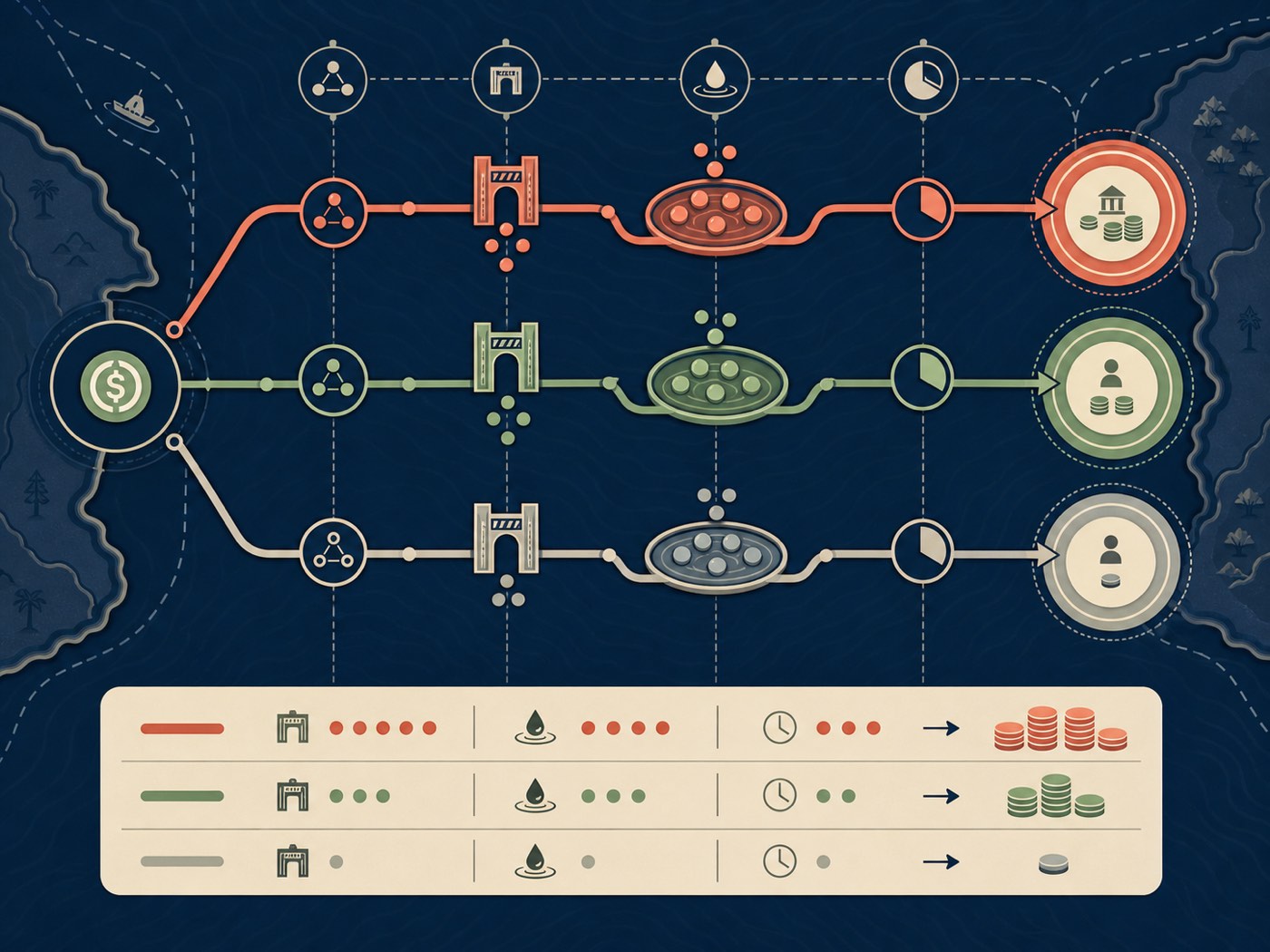
Stablecoin payment products will compete on reliability and clarity as corridors expand. The strongest route presentation can include five layers of information:
- A complete path map. Show the origin asset, source chain, conversion step, settlement chain, destination asset, and payout rail.
- Net received amount. Combine exchange rate, slippage, gas, bridge, service, and payout costs into the number the recipient should expect.
- Timing by stage. Separate swap execution, cross-chain finality, compliance review, and local payout timing.
- Liquidity and fallback. Identify the venue supplying liquidity and show whether a second route is available if depth changes.
- Operational status. Give the user a clear state for each hop, along with the action available when a transfer needs attention.
This information helps businesses manage treasury flows and helps individual users make better cross-chain swaps. It also gives emerging payment corridors a way to compete on the quality of the experience they provide.
Why This Matters For OneSwap Users
Stablecoin corridors are creating more opportunities to move value across borders, chains, and financial applications. Each new corridor adds useful reach and a new route to evaluate.
OneSwap is built around that decision layer. It helps users compare cross-chain swap paths, understand where liquidity sits, and see how fees and network steps affect the asset they receive. As stablecoins become payment infrastructure, clear route orchestration becomes part of the product itself.
Explore clearer cross-chain swaps at OneSwap.ai.