
AI Agents Are Becoming Stablecoin Customers. Routing Will Define the Experience
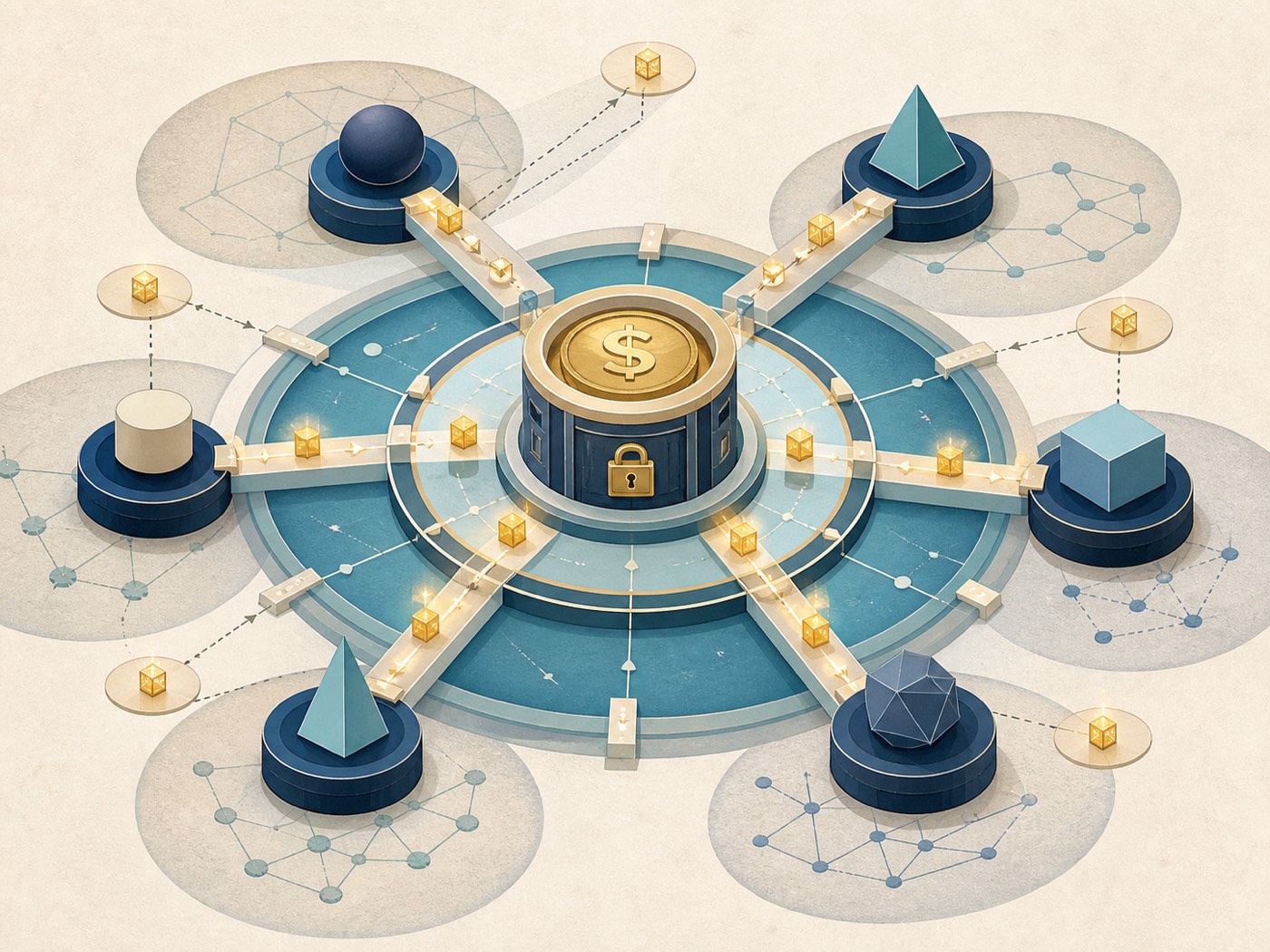
AI agents can initiate payments in milliseconds. Their payment rails still need to choose the right asset, chain, liquidity source, and settlement path.
OSL Group's latest post on X says it has launched OSL AgentPay, a multi-stablecoin payment infrastructure for the high-frequency, micro-value settlements expected from autonomous AI agents. The announcement arrives alongside a broader wave of agent payment infrastructure from Circle, Celer, and WSPN.
The market is moving toward software that can discover services, make decisions, and settle value on behalf of a user or business. Stablecoins fit that workflow because they support programmable transfers, global availability, and small payment amounts. The execution problem becomes more specific as usage grows: each payment needs a dependable route through assets, chains, liquidity, fees, and finality.
OSL's AgentPay Launch Shows a New Payment Surface
The OSL Group announcement on X describes OSL AgentPay as infrastructure for frequent, small-value settlements by autonomous agents. That description points to a different workload from a human trader opening a swap screen once or twice a day.
An agent may pay for an API call, a data lookup, a compute task, a delivery step, or another agent's service. The amount can be small while the number of transactions is large. The software initiating each payment needs a clear authorization policy, a predictable fee model, and a result it can verify without waiting for a human to inspect every transaction.
Circle's Agent Stack makes a similar case for agents as economic actors. Its announcement connects agent discovery and programmable payments with USDC, a global payments network, and onchain infrastructure. Together, these launches show how stablecoin payments are becoming a dedicated product surface for machine-driven commerce.
Machine-Speed Payments Need Exact Stablecoin Identity
An agent can hold several stablecoins across several chains. The ticker alone cannot describe the asset it should spend. The same symbol may refer to different issuers, contracts, decimals, transfer rules, and liquidity conditions on different networks.
A payment instruction therefore needs structured asset data:
- issuer and token contract
- source chain and destination chain
- balance available for the authorized account
- supported transfer method
- settlement asset expected by the recipient
The quote also needs to preserve the user's intent. A payment that asks for 25 USDC on a specific chain has a different outcome from a payment that allows any dollar stablecoin after conversion. An agent-ready route makes that distinction explicit before it signs.

Every Agent Payment Is a Route Decision
The shortest path from a wallet balance to a recipient is rarely the only path. An agent may start with USDT on one chain, convert part of the balance to USDC, transfer the value to another network, and settle into the asset requested by the recipient. Each action changes the cost, timing, and failure surface.
Celer's AgentPay technical post describes real-time payments, conditional payments, multi-hop routing, and dispute resolution for agent workflows. Those capabilities reinforce the need for a routing layer that can compare more than a single token transfer.
For a cross-chain payment, the execution sequence can include:
- Read the agent's approved source balances.
- Select an asset that satisfies the recipient's settlement requirement.
- Compare a direct transfer, a swap, or a transfer followed by a destination swap.
- Estimate gas, pool fees, price impact, relayer charges, and settlement time.
- Execute the path within the spending policy.
- Return a receipt with the final asset, amount, chain, and transaction state.
This is a routing problem with a payment deadline. A route that saves a small fee can lose its value if it misses the service window. A route that finishes quickly can become expensive when it crosses thin liquidity. The best path depends on the amount, destination, asset preference, and time limit.
Liquidity Becomes an API Contract
Human traders can inspect a chart or change a route manually. An autonomous agent needs a machine-readable answer before it commits funds. That answer should show how much value reaches the recipient after every relevant cost.
High-frequency payments also change the way applications evaluate liquidity. One small order may have little market impact. A stream of similar orders can move through the same pool, consume available depth, or create a price difference between two venues. The route engine needs current quotes, pool state, and a way to recognize when a previously good path has degraded.
The useful API response includes both the proposed action and the assumptions behind it:
- source and destination asset contracts
- chain and venue for every swap
- transfer protocol or relayer
- gross amount and final amount
- gas, protocol, pool, and relayer fees
- estimated price impact
- quote expiry and settlement deadline
- fallback status if a stage cannot complete
This structure lets an agent decide whether a payment fits its budget and timing policy. It also gives the application a reliable audit trail when a route changes between quote and execution.

Cross-Chain Settlement Must Preserve Policy
Autonomous payment infrastructure needs spending controls at the same time as it needs speed. A user or business may authorize an agent to spend up to a daily limit, use a defined set of stablecoins, pay approved recipients, or keep slippage below a threshold.
WSPN's W Agent announcement highlights per-transaction and per-day spending limits alongside multi-chain stablecoin settlement. Those controls describe the policy layer that a route planner has to respect.
The route should be rejected or re-quoted when a key condition changes. Examples include a destination contract outside the allowlist, a fee above the authorized maximum, a quote older than its expiry, a balance that no longer covers the final amount, or liquidity that pushes price impact above the policy threshold.
Policy-aware routing gives agents room to act independently while keeping the payment decision explainable. The system can show the chosen path, the approved limits, and the final receipt in the same record.
Stablecoin Rails Are Growing in Parallel
Circle's agent infrastructure, Celer's payment channels, WSPN's multi-chain settlement skill, and OSL's AgentPay launch approach the same market from different layers. Some products focus on discovery and payment APIs. Others focus on channels, stablecoin issuance, wallets, or settlement operations.
That parallel development increases the number of combinations available to an application. A merchant may accept one stablecoin on one chain. An agent wallet may hold another. A payment provider may prefer a third asset for treasury operations. The application still needs one way to compare routes and deliver the requested outcome.
The market will reward payment systems that make those differences legible. A stablecoin balance becomes useful when software can move it through the right venue, chain, and contract at the right time.
What Agent-Ready Routing Should Return
An agent-ready quote can stay compact while preserving the fields that determine the actual result:
- Intent: recipient, destination asset, amount, deadline, and allowed variance.
- Route: transfer method, swap venues, hops, and destination chain.
- Asset identity: issuer, contract, decimals, and native or bridged status.
- Economics: gas, fees, price impact, gross input, and net received amount.
- Policy: spending limit, recipient allowlist, slippage threshold, and quote expiry.
- Settlement: transaction hashes, confirmation state, final balance, and failure reason.
These fields give an agent enough information to select a path and give a human enough information to audit the decision. The interface can remain simple because the complexity is organized inside the quote.
Why This Matters for OneSwap
OneSwap helps users compare cross-chain swap paths across assets, chains, and liquidity sources. Agentic commerce adds a new reason to make that comparison precise: software will need to make many small payment decisions without losing track of asset identity, route quality, or policy.
The strongest agent payment experience will combine an approved intent with a transparent execution path. It will show where the funds start, how they move, what liquidity supplies each conversion, what the recipient receives, and when the settlement is complete.
As more stablecoin payment rails launch, route quality will become part of the payment product itself. Explore clearer cross-chain swaps at OneSwap.ai.