Circle's Arc Mainnet Is Coming. Stablecoin Routing Will Decide Its Liquidity Reach

A stablecoin-native chain can make settlement predictable. Liquidity still has to reach the place where the user trades, holds, and exits.
Circle's Arc mainnet is scheduled for September 16, according to Circle's August 5 Q2 update on X. The post names BlackRock, DTCC, Galaxy, Global Payments, ICE, Mastercard, MoneyGram, SBI Group, Standard Chartered, Sumitomo Corporation, and Visa among the founding validators.
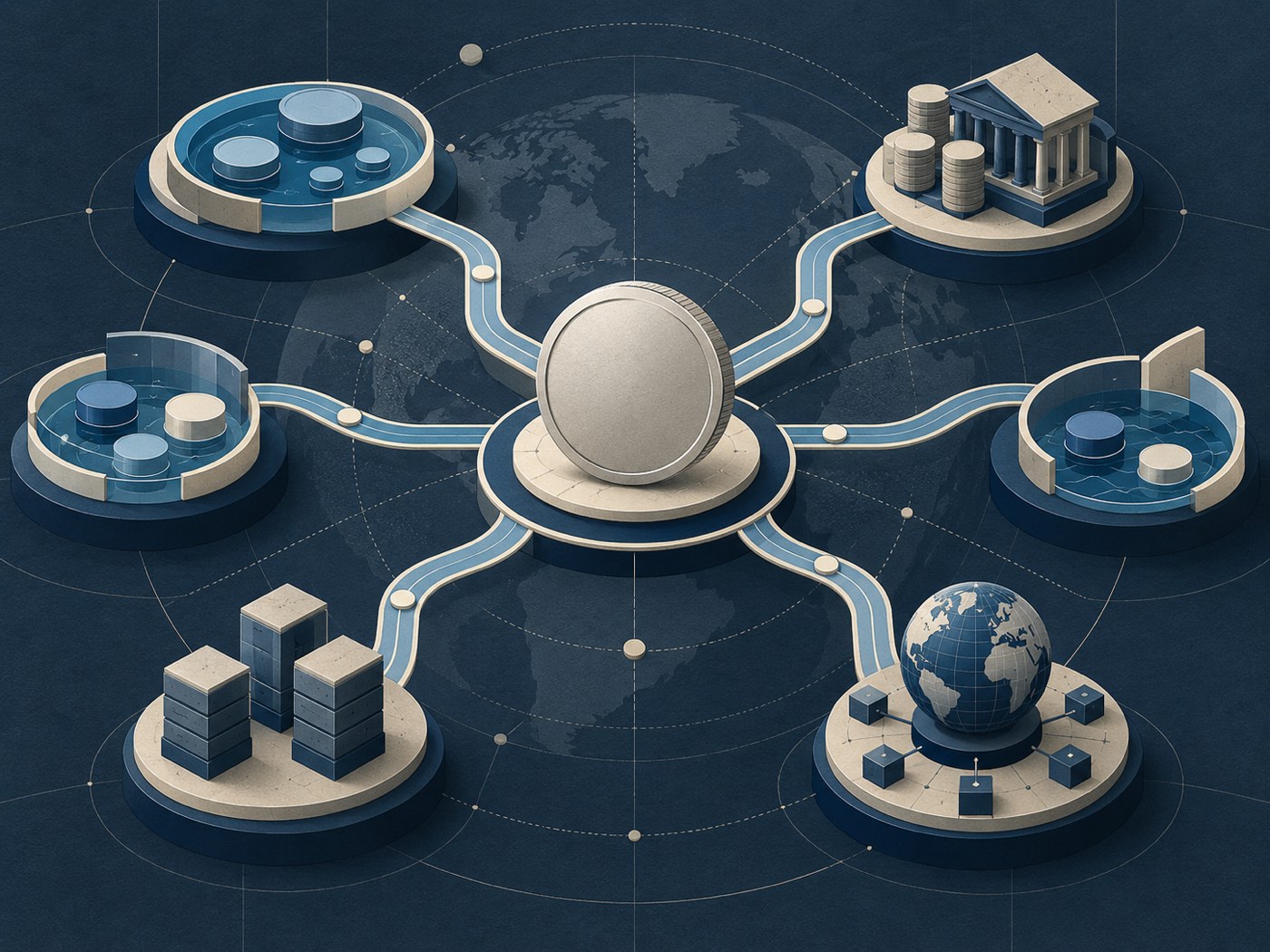
Arc gives that launch a clear stablecoin thesis. Its public site describes USDC as the starting point for native gas, predictable dollar-denominated fees, deterministic sub-second finality, and a liquidity hub connected to CCTP and Gateway. The network is designed for payments, foreign exchange, capital markets, lending, and other financial flows that need a reliable settlement layer.
The launch also creates a practical routing question. A chain can offer clean settlement and still have uneven liquidity across pairs, venues, and asset representations. Users arriving from other networks need a path that accounts for the transfer protocol, the trading venue, the gas asset, the destination contract, and the amount that reaches the final wallet.
Arc Mainnet Has a Clear Stablecoin Thesis
Circle's official Q2 update puts the Arc mainnet date and validator set in the public market conversation. The breadth of the list connects the chain to financial institutions, payment companies, card networks, and digital asset firms at the same time.
Arc's network overview describes an open Layer 1 built around programmable money and real-world economic activity. The site presents four relevant design choices:
- USDC begins the native gas model, keeping fees in a familiar dollar asset.
- Deterministic sub-second finality supports time-sensitive settlement.
- Configurable privacy gives financial applications a way to manage sensitive data while preserving auditability.
- CCTP and Gateway connect Arc to liquidity and value flows across the multichain ecosystem.
Together, these choices make Arc attractive as a settlement environment. They also make the connection between Arc and other chains part of the product experience from the first day.
A New Chain Adds a New Liquidity Surface
New networks create more places for assets to trade. Each place starts with its own pool depth, market makers, token contracts, fee schedule, and user distribution. A USDC pair with a tight spread can exist beside a thin pool for the same destination asset. A route that looks short on a diagram can deliver less after price impact and fees.
Arc's institutional positioning raises the commercial value of this detail. Payment applications can move dollar liquidity between accounts. Treasury systems can rebalance working capital. DeFi applications can use USDC as collateral or settlement inventory. Each flow needs a dependable answer to a simple question: which path delivers the requested asset at the best net result for this amount?
The answer changes with trade size and destination. A small payment may prefer a direct transfer. A larger conversion may use a deeper pool on another chain before settling on Arc. A user who wants an asset that has limited Arc liquidity may need a second swap after the transfer. Route selection therefore becomes part of the settlement design.
Native USDC Gas Changes the Quote Model
Gas paid in USDC makes the fee line easier to understand for many users. The quote can express the network fee in the same dollar unit as the transfer and swap. That clarity helps a trader compare a route with one bridge hop against a route with a cheaper bridge and a more expensive destination swap.
The route still needs a complete cost model. A useful quote should include:
- The exact source asset and source chain.
- The transfer or bridge method.
- The destination asset and contract address.
- The swap venue and expected price impact.
- The Arc gas charge in USDC.
- Any relayer, protocol, or withdrawal fee.
- The expected final amount and settlement time.
This model turns a familiar stablecoin balance into a full execution result. Users can see whether they are moving USDC, swapping USDC, or doing both operations in sequence. Applications can make the same distinction in their transaction previews and backend risk checks.
Cross-Chain Access Still Needs Route Intelligence
The Arc developer documentation shows a browser-wallet bridge flow between Ethereum Sepolia and Arc Testnet. The example uses Circle's App Kit and CCTP v2, then exposes bridge steps such as approval, burn, attestation, and mint. The current example is a testnet integration, while Arc's mainnet launch remains scheduled for September 16.
That sequence matters because a bridge transfer and a swap solve different problems. CCTP can move native USDC between supported networks. A swap can convert the received USDC into the asset the user actually needs. A route planner has to join the two actions while preserving the user's destination, deadline, and risk preference.
The complete path may look like this:
- The user starts with USDC or another stablecoin on a source chain.
- The transfer layer moves value to Arc or another destination network.
- The destination venue converts the settlement asset into the requested token.
- The quote accounts for gas, pool fees, slippage, and any relayer cost.
- The user receives the final token with a clear record of the completed stages.
Every stage can alter the best route. A source chain with cheap gas can win for a larger transfer. A destination chain with deep liquidity can win for a volatile asset. A direct USDC path can win when the recipient needs dollar settlement. One interface should surface those tradeoffs without forcing users to assemble them manually.

Institutional Participation Raises the Execution Standard
Arc's validator list puts banks, payment companies, card networks, and market infrastructure providers in the same launch story. That mix suggests a wide range of transaction shapes, from consumer payments to treasury movements and capital market settlement.
Institutional flows place a high value on predictable behavior. A quote needs a precise asset identity. A transfer needs a clear completion state. A swap needs enough depth for the requested size. A user interface needs to distinguish a confirmed destination balance from a transaction that is still waiting on an attestation or a downstream swap.
The same expectations apply to retail users. A consumer moving a stablecoin between networks still needs to know the asset that arrives, the cost of the path, and the time required. Better infrastructure increases the number of possible routes, which increases the value of software that explains and compares them.
What a Good Arc Route Should Show
As Arc approaches mainnet, wallets and applications can make the route legible with a small set of fields:
- Asset identity: name, chain, contract, and whether the asset is native or bridged.
- Transfer method: CCTP, a liquidity bridge, exchange withdrawal, or another supported path.
- Liquidity source: pool, market, aggregator, or venue supplying the conversion.
- Cost breakdown: gas in USDC, pool fees, relayer charges, and estimated price impact.
- Final result: expected destination amount, recipient chain, and token contract.
- Timing: transfer confirmation, attestation, swap execution, and final settlement.
This information gives users a decision surface instead of a single opaque button. It also gives developers a useful way to compare routes across different order sizes and destination assets.

Why This Matters for OneSwap
OneSwap helps users compare cross-chain swap paths across assets, chains, and liquidity sources. Arc's upcoming mainnet puts a timely example in front of the market: stablecoin infrastructure can improve settlement while route quality determines how efficiently users reach the asset they want.
The strongest Arc experience will connect both layers. A user should be able to see the source contract, transfer method, destination pool, USDC gas cost, price impact, final amount, and expected time before signing. That view makes a new chain easier to use and gives liquidity providers a clearer path to real order flow.
As more networks adopt stablecoin-native settlement, routing becomes a core part of the financial interface. Explore clearer cross-chain swaps at OneSwap.ai.