
Robinhood Chain’s DeFi Rush Makes Route Clarity Matter

Robinhood Chain is already moving from launch headline to live DeFi surface area. Auctions, yield access, launch tools, and DEX experiments are starting to arrive together, and that makes route clarity a practical user requirement.
Robinhood Chain is entering the part of the cycle where a new network becomes more than a brand announcement. The first wave of DeFi activity is taking shape around token launches, liquidity bootstrapping, yield access, and new exchange experiments.
That matters because users rarely experience a new chain as a clean ecosystem map. They experience it as a set of decisions: which asset to bridge, which pool has depth, which route handles slippage, which app supports entry and exit, and which path leaves them with an asset they can actually use.
Robinhood Chain’s early DeFi activity gives that problem a clearer shape.
The First DeFi Layer Is Taking Shape
On July 13, Uniswap said CCA and Uniswap Auctions were live on Robinhood Chain. The announcement pointed to fully onchain token auctions, market price discovery, and liquidity bootstrapping on Uniswap v4. A follow-up said Robinhood Chain auctions would be listed in the Uniswap Web App, where users could launch, browse, bid, and claim from one place.
Two days later, Yield.xyz said its API supports Robinhood Chain, with Morpho and Spark instances accessible through the same integration surface. Its follow-up highlighted enter, exit, and balance queries across Morpho and Spark through a common schema.
Around the same window, Robinhood’s own account amplified the chain launch, while smaller projects started pointing at launch tools, auto-bridge flows, and new DEX ideas. PumpKing described token launches on Robinhood Chain through Flap with a Solana-to-Robinhood funding flow. Sherwood Exchange described a coming DEX and fair-launch ecosystem.
This is enough to show a pattern. The early market now centers on how quickly users can understand what each route actually does.

New Chains Create Fast-Moving Route Fragmentation
Every new DeFi ecosystem starts with fragmentation. Liquidity arrives in pockets. Launch pools appear before mature secondary markets. Yield integrations expose positions that depend on vault design, collateral choices, liquidity caps, and withdrawal behavior. Bridge flows add another layer of assumptions before the user even reaches the target app.
Robinhood Chain has a particular version of that challenge because its distribution story is strong. A chain connected to a large retail brand can attract attention quickly. Attention brings builders, launch tools, and speculative liquidity. It also compresses the time users have to evaluate execution quality.
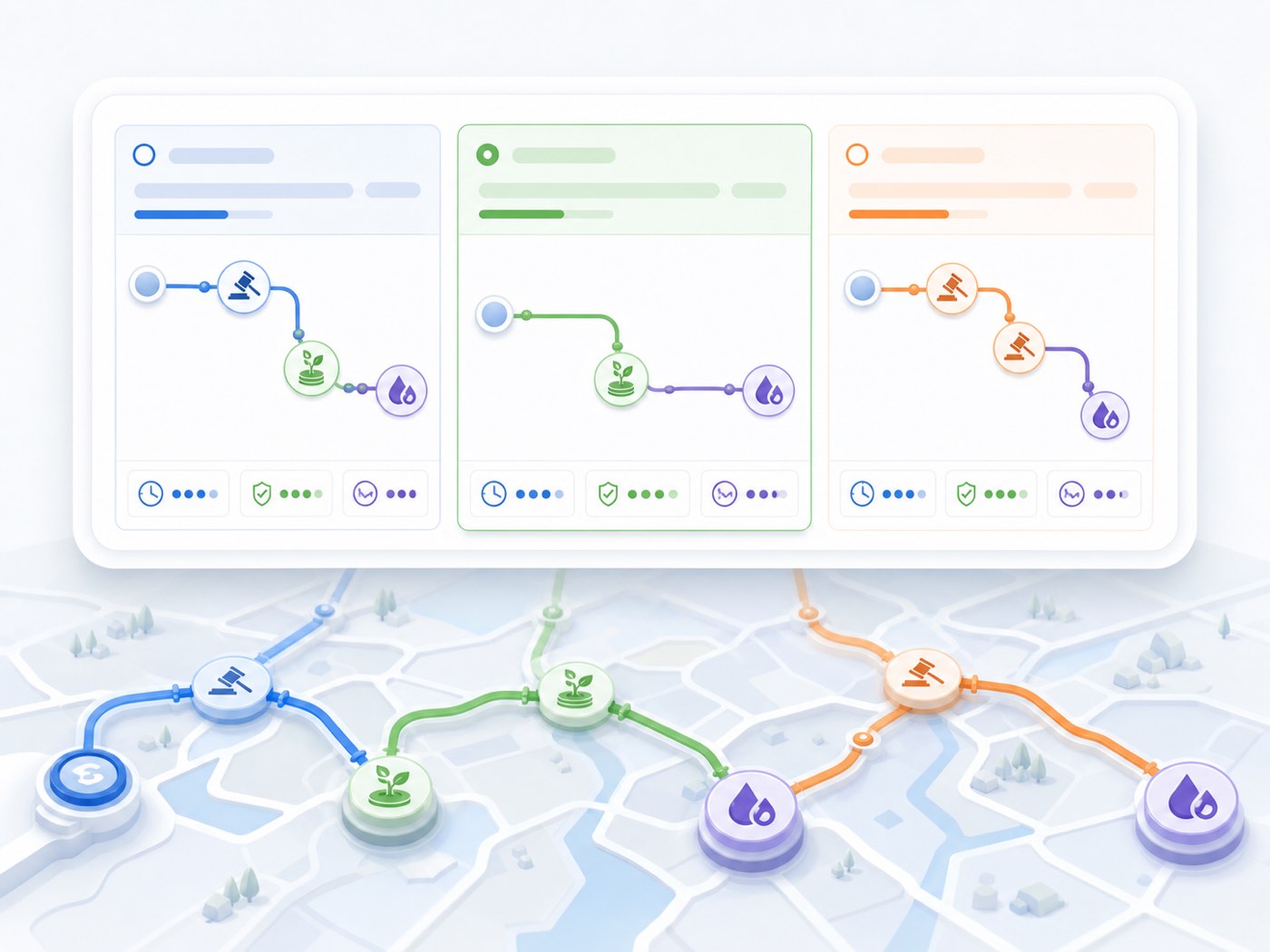
The first click into a new chain can feel simple. The full path can include source-chain liquidity, bridge availability, destination-chain gas, pool depth, auction design, vault mechanics, and the final exit route. Any one of those pieces can change the trade users actually receive.
That is where routing becomes a product issue. A route has to answer more than price. It has to reveal whether the quoted path is durable, where the liquidity sits, what chain transitions are involved, and what the user may need to do after the swap lands.
Auctions And Yield Need Clear Execution Context
Auctions can improve launch mechanics by creating a more transparent price discovery process. They still require users to understand the asset, the settlement path, claim mechanics, and the liquidity that appears after the auction ends.
Yield routes have a different set of questions. If Morpho and Spark positions are available through an API, users can reach yield surfaces faster. They still need to understand which asset enters the route, which vault or market receives it, what the exit looks like, and whether liquidity remains usable when demand spikes.
Launch tools add another layer. Auto-bridge experiences can make entry feel smooth while compressing the complexity of the path into the background. A user may start on one chain, fund on another, launch or buy on Robinhood Chain, then need a clean path back to a liquid asset.
Each of these experiences benefits from a simple interface. The underlying execution needs to stay visible enough for users to make a confident decision.
The Real Competition Is Execution Quality
New-chain narratives move quickly. The first projects bring attention. The second wave brings liquidity fragmentation. The third wave brings users who compare execution across apps.
Those users will care about practical details:
- Which route gives the best received amount after fees and slippage?
- Which path depends on a bridge step?
- Which pool or vault creates the main execution constraint?
- Which chain holds the destination asset after completion?
- Which route keeps the exit path clear?
This is the layer where aggregators and routing tools create value. They reduce the amount of hidden work a user has to perform before making a trade. They also help newer ecosystems mature by making liquidity easier to evaluate and access.
Robinhood Chain can attract projects quickly. Sustained usage will depend on whether users can move through that activity with confidence.
Why This Matters For OneSwap Users
OneSwap is built for the part of DeFi where route quality matters. As new ecosystems like Robinhood Chain add auctions, yield access, launch tools, and DEX liquidity, users need a clearer way to compare paths before committing capital.
The goal is simple: make swaps easier to understand across chains, tokens, and liquidity sources. A good route should show the user where value moves, what the execution path requires, and how the final asset lands.
That is the kind of clarity new DeFi ecosystems need as they scale from launch excitement into real trading activity.
Explore smarter swap routing at OneSwap.ai.