
USDG's Arbitrum Launch Raises the Bar for Cross-Chain Stablecoin Routing
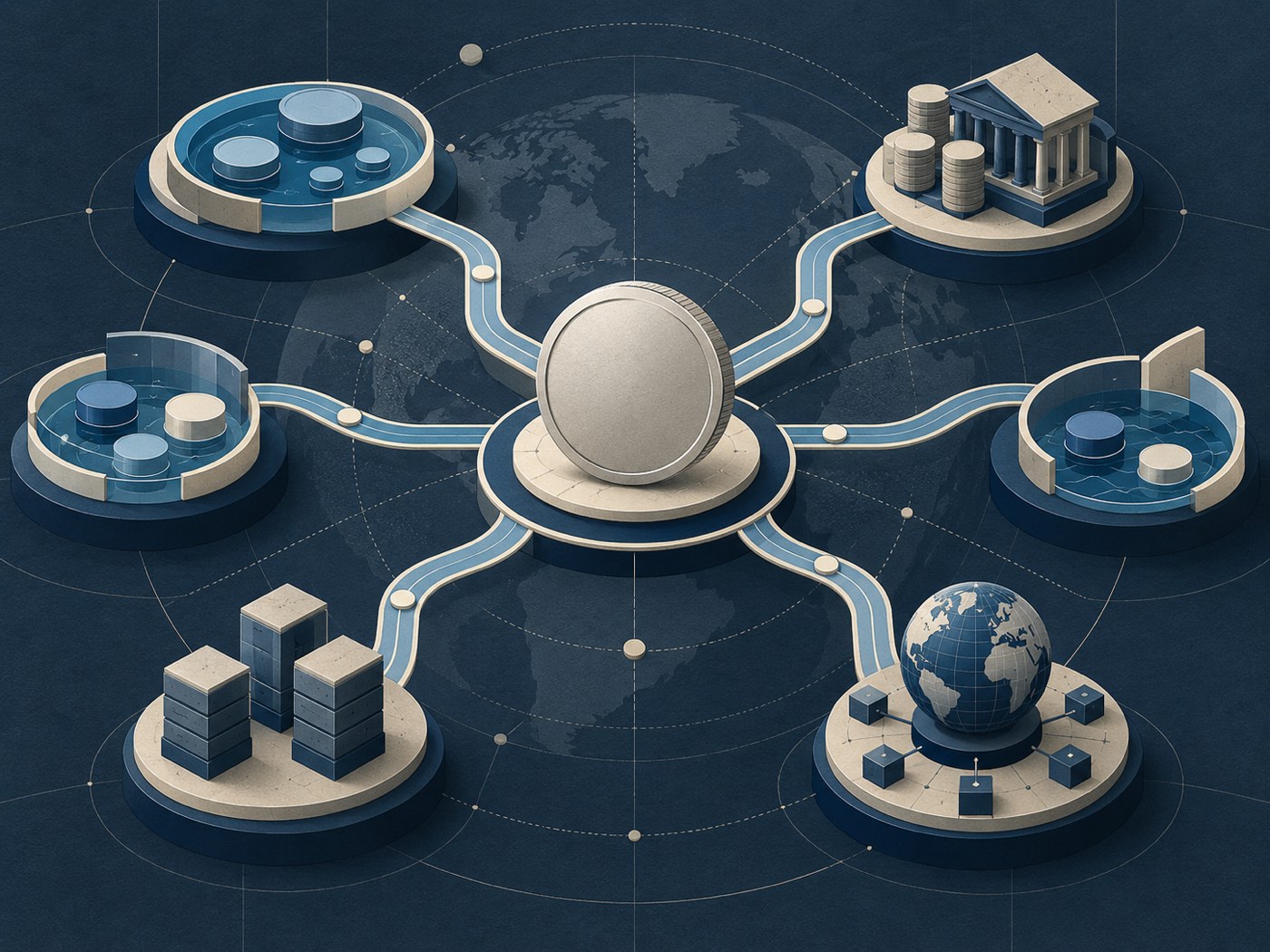
USDG's native launch on Arbitrum brings a regulated dollar into lending, derivatives, RWA and settlement markets. The next product question is how every route exposes identity, depth, transfer conditions and settlement evidence.
The signal: a stablecoin arrival with real distribution
On October 6, 2026, Arbitrum announced that Global Dollar (USDG) had launched natively on Arbitrum One. The launch named Fluid, Morpho, GMX, Maple, Uniswap and Kraken among the first integrations. Global Dollar Network described the move as part of a 150-plus-partner network with more than $3 billion of USDG in circulation.
That combination matters. A stablecoin gains practical reach when it appears in the places where users borrow, trade, provide liquidity, post collateral and settle assets. The launch connects those roles across one active DeFi environment, while the wider USDG footprint includes Ethereum, Ink, Mantle, Robinhood Chain, Solana and X Layer.
The conversation on X is already moving toward distribution. CoinMarketCap highlighted the Arbitrum launch and its first integrations, while other recent posts connected stablecoin adoption with usable DeFi utility. The market signal is clear: stablecoin expansion is becoming a routing problem with many visible surfaces.
Why native issuance changes the route map
Native issuance gives a network direct access to the asset's supply and settlement environment. Users can interact with a local contract, local pools and local applications. Developers can design around a stablecoin that has a defined issuance path and documented token addresses.
That structure also creates more route states to explain. A user may hold USDG on Arbitrum and seek a token on another network. The route can involve a local swap, an omnichain transfer, a destination swap, or a combination of those steps. Each step can change the effective price, timing, fee profile and failure surface.
For a cross-chain aggregator, the asset symbol is only the beginning. A useful route record should identify the source contract, the destination representation, the bridge or messaging layer, the pool used for each swap and the expected settlement event. The interface can then show a route that a user can understand and a support team can audit.

A route quote needs a richer context
The headline quote is one part of the decision. A production route should also answer five questions:
- Which asset is moving? Contract addresses, chain identifiers and token standards keep similarly named assets separate.
- Where does the liquidity come from? Pool depth, venue status and expected price impact show the conditions behind the quote.
- How does the asset cross the network boundary? A bridge, an OFT transfer or another messaging path creates a specific dependency with its own timing and status.
- What will the user receive? The destination asset, amount, fee and minimum received amount should stay visible through the route.
- What proves completion? Source and destination transaction links, transfer identifiers and settlement status turn a promise into evidence.
These fields support better decisions for stablecoin trades, treasury movements and tokenized asset settlement. They also make route quality measurable. An aggregator can compare effective output, time to settlement, bridge reliability and venue conditions instead of ranking paths by a single number.
Cross-chain liquidity is a coordination problem
USDG's presence across several networks expands the number of places where liquidity can form. It also expands the number of paths that a routing system can consider. A source chain may have deep USDG liquidity while a destination chain has a better market for the requested asset. The best route can require both markets and a transfer layer that links them.
That coordination has operational consequences. Liquidity changes during the day. A pool can move from healthy depth to thin depth within a few blocks. Messaging can complete in a different interval from the source swap. A supported token can have different liquidity quality on each network. The route engine needs fresh data for every leg and a clear fallback when a dependency degrades.

What a production route should reveal
The user experience becomes stronger when the route card carries execution evidence in a compact form:
- Asset identity: source and destination contract addresses, chain names and decimals.
- Liquidity view: venues, pool depth, estimated impact and the timestamp of the quote.
- Transfer view: messaging provider, expected duration, current status and retry guidance.
- Settlement view: minimum received amount, destination transaction and final confirmation.
- Risk view: paused venues, token restrictions, bridge health and any route-specific warnings.
This context gives traders more control and gives teams a shared language for support, monitoring and post-trade review. It also lets the route engine adapt when a single venue or transfer path changes.
The OneSwap angle
Stablecoin launches create more useful liquidity when users can move it into the assets, applications and networks where it has work to do. OneSwap focuses on that movement. The product can connect quote quality with asset identity, liquidity conditions, cross-chain dependencies and settlement proof so users can choose a route with the full execution picture in view.
As regulated dollars reach more DeFi venues and dedicated chains, route selection becomes an everyday product surface. A clear route helps users understand the trade, helps teams diagnose delays and helps liquidity travel to its most productive destination.
Explore cross-chain execution with OneSwap at https://oneswap.ai.