cbBTC on Monad: Why New DeFi Liquidity Makes Swap Routing More Important

Chainlink says cbBTC is moving into Monad through CCIP, with more than $20 million already deployed. That sounds like a simple growth headline for DeFi, but for actual users it creates a more practical question: how do you get the best swap outcome once liquidity starts scattering across new wrappers, chains, and venues?
cbBTC on Monad: Why New DeFi Liquidity Makes Swap Routing More Important
Fresh liquidity entering DeFi usually gets framed as a pure win. More assets, more activity, more builders, more reasons to be bullish.
That is directionally true. But once a wrapped Bitcoin asset like cbBTC starts showing up in a new high-performance ecosystem, the user problem changes fast. It is no longer just about access. It becomes a question of route quality, execution, and whether the path from one asset to another is actually efficient.
Why this launch matters
Chainlink's recent announcement around CCIP bringing cbBTC into Monad matters because it pushes a highly recognizable Bitcoin wrapper into a chain that wants to attract more DeFi activity. That creates a new pocket of tradable liquidity and a new venue for swaps, LP strategies, and arbitrage.
In theory, that should be good for users. More venues should mean more opportunity.
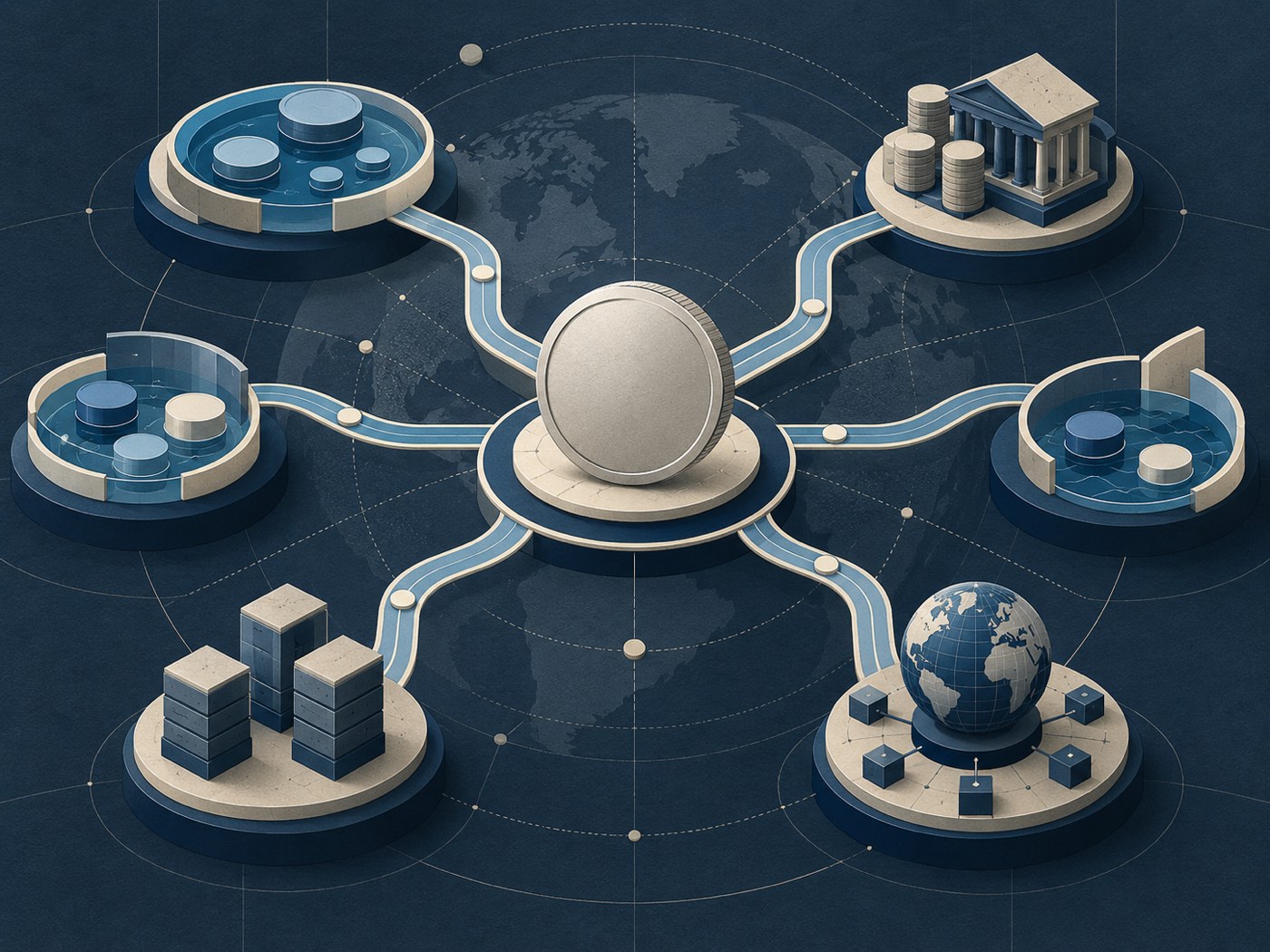
In practice, fresh liquidity almost always arrives in a fragmented state. Some of it sits in one pool, some in another, some behind a bridge step, and some inside routing paths that look cheap at the top line but become worse once size, timing, or slippage enters the picture.
The hidden problem with new DeFi liquidity
When people hear that a token or wrapped asset has entered a new ecosystem, they often assume the hard part is over. The assumption is simple: if liquidity exists, good execution should naturally follow.
That is not how this usually works.
New liquidity can improve headline depth while still making user decisions harder. Different pools price the same asset slightly differently. Different venues have different fee structures. Different route combinations produce different final outcomes. A path that looks fine for a small swap may become expensive for a larger one.
That gets even more obvious when the asset in question is a Bitcoin wrapper entering a newer or faster-growing DeFi environment. Attention rises quickly. So does flow. But depth does not become evenly distributed overnight.
Why swap routing matters more than the headline

The optimistic version of the story is easy to tell: cbBTC is now available in another DeFi environment, so users have more freedom.
The more useful version is this: users now have more decisions to make, and bad routing choices can erase part of the benefit.
A swap is not just a token pair and a button click. It is a path through liquidity. That path can include different pools, pricing assumptions, bridge logic, and fee layers. Once market conditions move or a user wants to trade size, execution quality becomes the real product.
That is why route discovery matters so much in moments like this. When liquidity starts spreading across more venues, the difference between a clean route and a lazy route becomes more visible.
The execution gap users actually feel

Most people do not experience fragmentation as an abstract market structure issue. They experience it as a worse result.
That can show up in a few ways:
- more slippage than expected
- a wider effective spread than the quoted price suggested
- extra friction between the starting asset and the final asset
- confusing route choices that hide the true cost of the trade
This is where new DeFi liquidity can be slightly deceptive. The ecosystem looks healthier from far away because more assets are present. But from a user's perspective, the question is still brutally simple: what did I actually receive after the trade completed?
Why this trend is likely to continue
cbBTC on Monad is not a one-off curiosity. It is part of a broader pattern.
As more wrapped assets, issuer-linked tokens, and cross-chain rails enter DeFi, liquidity will keep spreading into more environments. That should expand access. But it also raises the bar for tools that help users navigate those environments efficiently.
The more multi-chain DeFi grows, the less useful a single-venue view becomes. Users increasingly need a better way to compare routes, reduce hidden losses, and avoid paying an invisible tax through poor execution.
What this means for OneSwap users
This is exactly the type of market structure shift that makes smart aggregation more valuable.
When liquidity moves into more chains and more swap venues, the challenge is no longer just finding access. It is finding the best route with less friction and a better final outcome. That is where OneSwap fits.
OneSwap helps users compare routes across venues and focus on execution quality instead of trusting the first visible path. If you want cleaner swap outcomes as DeFi liquidity keeps fragmenting across chains and wrappers, try OneSwap.