
The Stablecoin Yield Fight Is Heating Up. Here Is How to Protect Liquidity and Execution Before the Rules Shift Again
"Senator Thom Tillis plans to release stablecoin yield draft agreement this week."
The Stablecoin Yield Fight Is Heating Up. Here Is How to Protect Liquidity and Execution Before the Rules Shift Again
Stablecoin policy does not usually trend because users suddenly care about legislative wording. It trends because the market understands that rules around rewards, incentives, and third-party yield can change where liquidity sits, how platforms compete, and what users actually receive when they move size.
That is why the latest fight around stablecoin yield matters. Reports this week said Sen. Thom Tillis is working to release draft language aimed at resolving the long-running dispute over whether crypto platforms should be able to offer yield-like rewards on stablecoin balances. Banks are pushing back hard. Crypto firms do not want the business model closed off. Users are left in the middle.
For most traders and investors, the important question is not who wins the lobbying battle. The important question is what happens to execution if stablecoin liquidity starts spreading unevenly across venues, products, and incentive programs.
What this stablecoin yield fight is really about
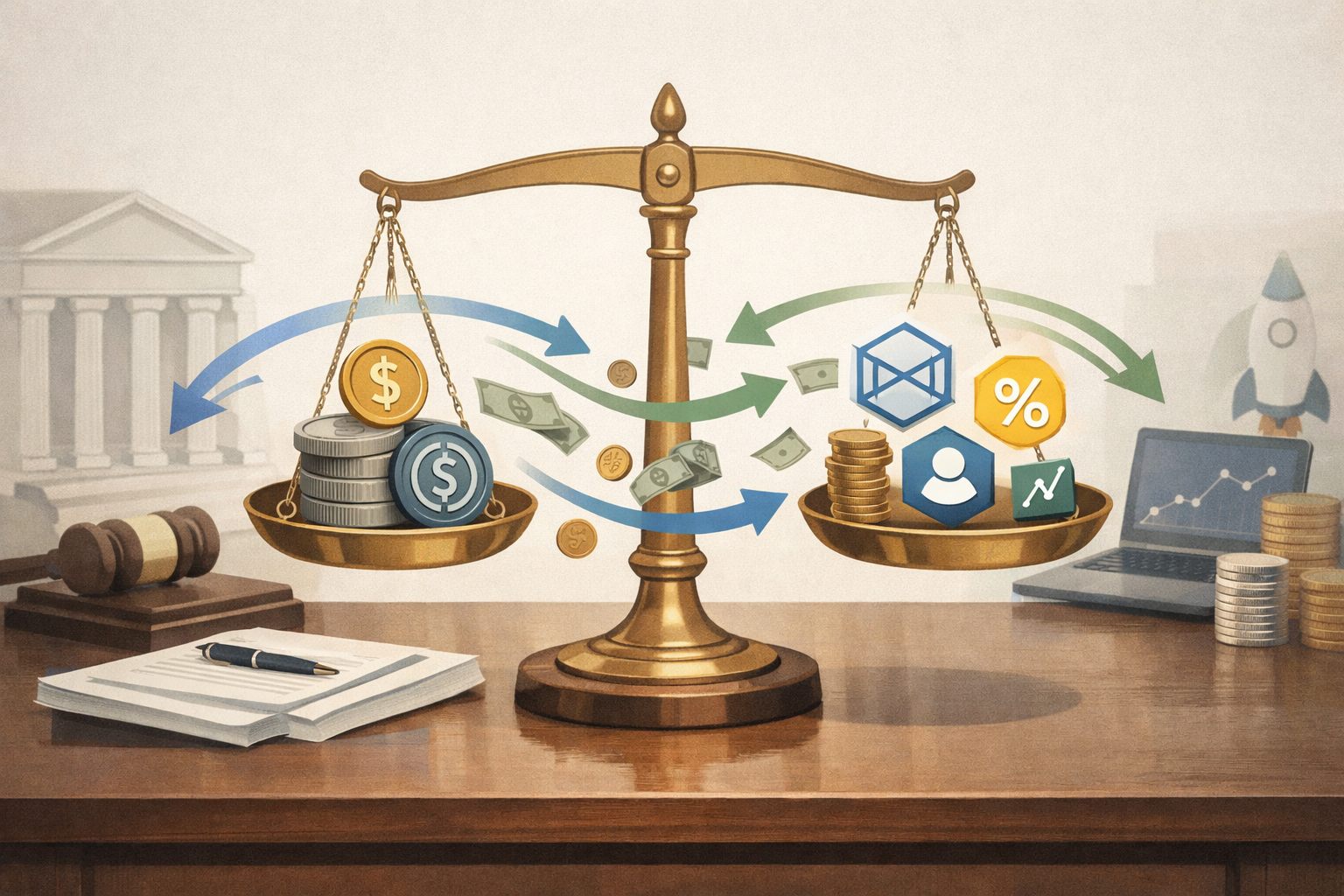
At the core, the debate is simple. Congress already drew a line against payment stablecoin issuers directly paying interest. The current dispute is about whether exchanges or other third-party platforms should still be able to wrap stablecoin balances in reward programs, earnings products, or incentive structures that behave a lot like yield.
Banks argue that allowing those rewards could pull deposits away from the traditional banking system and create funding pressure, especially for smaller institutions. Crypto companies argue that banning rewards too broadly would kill useful product innovation and reduce competition.
That sounds abstract until you translate it into market behavior. If one part of the market can offer extra return on idle balances and another part cannot, liquidity does not just sit still. It migrates. And when liquidity migrates, execution quality changes.
Why users should care before any final rule is published
A lot of people treat stablecoins as if they are interchangeable cash wrappers. In practice, they are distribution rails. The moment one rail becomes more attractive than another, flow starts concentrating in new places.
That matters for three reasons.
First, quote quality can diverge faster than people expect. Two routes that look similar on the surface can produce different net outcomes once spread, slippage, and fee treatment are fully accounted for.
Second, platform incentives can temporarily hide weak execution. A venue can look attractive because it advertises rewards, but users may still lose more than they realize if the route quality is poor or the exit path is expensive.
Third, liquidity concentration tends to punish late decision-making. Once a regulatory headline hits and users start repositioning together, the cost of moving from one stablecoin or asset bucket into another can widen quickly.
How stablecoin rule changes can fragment liquidity
When markets talk about fragmentation, they often picture a technical problem inside exchanges. In reality, fragmentation is often created by incentives.
If one class of providers can keep offering yield-like rewards and another cannot, users may leave funds parked longer in one environment. If banks, custodians, or exchanges all react differently to the same rule change, then stablecoin balances do not stay evenly distributed. They cluster around the rails that seem most useful, most permissive, or most rewarding.
That creates several execution problems:
- some pairs become deeper on one venue and thinner on another
- certain stablecoin routes become more expensive to exit during stress
- quote quality starts depending more on where liquidity is trapped
- users trying to rotate quickly into BTC, ETH, or altcoins can face a worse all-in price than expected
This is exactly where people get hurt by hidden spread. They think the market moved against them, when part of the loss really came from the path they used.

A practical checklist before you rotate through stablecoins
If the stablecoin yield dispute keeps pushing headlines, users should become more deliberate about how they move between assets. A simple checklist helps.
1. Check the real destination, not just the headline quote
A route that looks attractive at first glance may deliver less once the full fee stack and spread are included. Always think in net receive terms.
2. Pay attention to where liquidity is deepest right now
Liquidity can migrate quickly when incentives, regulation, or platform policy change. Yesterday's best path may not be today's best path.
3. Do not assume all stablecoin exits are equally clean
USDT, USDC, and other dollar rails do not always clear with the same depth, speed, or downstream routing quality. The differences matter more when moving size or rotating under time pressure.
4. Avoid confusing yield with good execution
A platform offering extra rewards on idle balances can still be a poor place to rotate if the route out is expensive. Yield can improve parking economics while still hurting swap economics.
5. Compare routes before the market gets crowded
The worst time to discover a bad route is after a hot headline pushes everyone to the same side of the trade.
What this means for BTC, ETH, and altcoin rotations
Stablecoin policy stories do not stay inside stablecoins. They change how users fund rotations into the rest of the market.
If liquidity concentrates unevenly, then the cost of moving from stablecoins into majors can rise at the exact moment users want to act quickly. That becomes more obvious during momentum bursts, volatility spikes, or narrative shifts where traders want to move from idle balances into BTC, ETH, or higher-beta positions.
So even if you never touch a yield product directly, the policy fight still matters. It can change the quality of the rails you rely on when you finally decide to move.
The smarter way to handle unstable liquidity conditions
Users do not need to predict every regulatory outcome perfectly. They need to respect that rule changes can reshape where liquidity lives and how expensive it becomes to move through the market.
That means building a habit of comparing routes, checking net receive, and reducing unnecessary execution drag whenever stablecoin incentives start shifting.
In periods like this, the cleanest decision is often not the noisiest platform or the highest advertised reward. It is the path that gets you into the next asset with the least hidden damage.
Why this is exactly where OneSwap helps
When stablecoin rules, incentives, and liquidity conditions start moving around, users need more than a raw quote. They need a cleaner way to compare routes and reduce hidden losses before committing to a swap.
OneSwap helps by comparing routes across providers so you can move between BTC, ETH, stablecoins, and altcoins with better visibility into execution quality. Instead of guessing where liquidity is best, you can check the path before you move.
If you want a faster way to reduce routing friction and hidden spread when the market shifts, start at https://oneswap.ai.