Robinhood Chain's Liquidity Surge Makes Route Context a Product Feature

Robinhood Chain is attracting liquidity quickly. The next user question is simple: which path delivers the asset they need with the least hidden friction?
Robinhood Chain has become one of the clearest examples of a new network attracting several types of onchain activity at once. A recent post from @ClutchMarkets highlighted reported liquidity of $5.73 million across 141 positions and $234,590 in LP fees. Another recent post asked where liquidity goes when a new chain enters the ecosystem.
Those signals point to a practical product question for anyone moving assets into or across Robinhood Chain: which path delivers the exact asset the user needs, with the right liquidity, timing, and destination fit?
Robinhood Chain brings multiple markets into one route map
Robinhood describes Robinhood Chain as a permissionless, Ethereum-compatible Layer 2 built to connect traditional markets, crypto, and real-world assets. The official support page says Robinhood Wallet users can send, receive, and swap crypto on the network, while ETH pays transaction fees.
That combination gives the chain a broad surface area. Crypto swaps, stablecoin flows, and tokenized real-world assets share one network while using different pools, contracts, transfer methods, and user expectations.
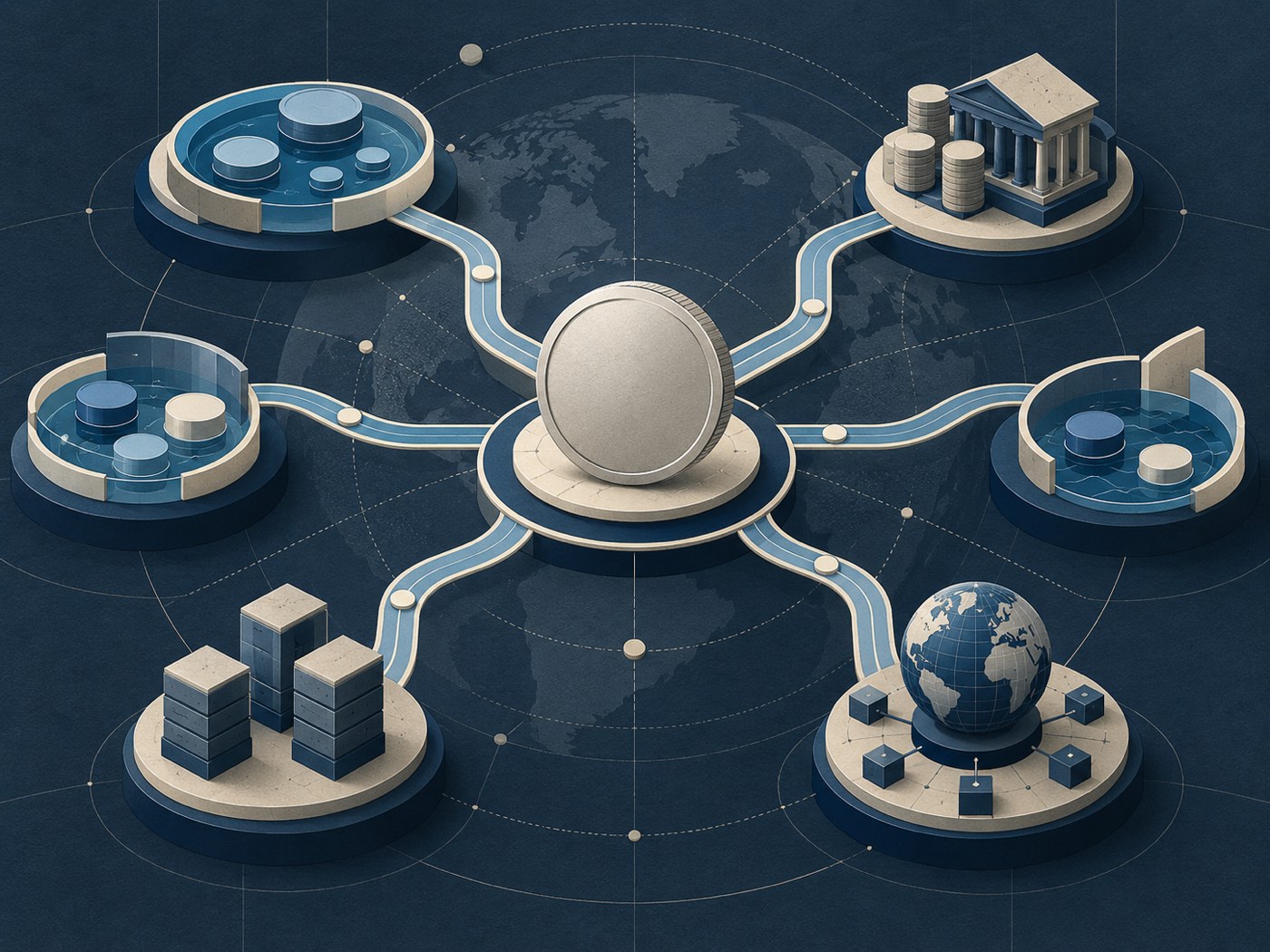
The route map therefore contains more than a list of supported tokens. It contains the source asset, the destination asset, the liquidity venue, the bridge or messaging system, the gas asset, and the next application the user plans to use.
Liquidity growth appears in layers
The recent X activity around Robinhood Chain shows a market growing through several liquidity pockets. The @ClutchMarkets post reported $5.73 million locked across 141 positions and $234,590 in LP fees. The figures describe activity in a particular protocol and time window, so they should guide route investigation instead of acting as a universal quote.
CoinDesk reported in July that tokenized real-world assets on Robinhood Chain had reached about $70 million, while total value locked had risen to about $312 million. It also reported more than $600 million in daily DEX volume at that point, with stablecoins and memecoins still representing large parts of the market. The mix creates different execution conditions for each user request.
A deep liquidity position can support one pair and size while another pair remains thin. A tokenized stock can have visible market activity while the fastest bridge route carries a different asset representation. A stablecoin balance can be large on the chain while a destination application accepts only a specific contract.

Route quality depends on the full path. The quoted output, the price impact, the transfer time, the destination contract, and the next-use requirement all shape the result.
Bridge choice changes the route
Robinhood Chain's bridging documentation lists a canonical Arbitrum bridge alongside partner routes. The canonical route is described as a trustless L1 to L2 path with deposits that typically take about 10 minutes and withdrawals that require a 7-day challenge period. Partner routes cover messaging and omnichain transfers, intent-based bridges, and cross-chain swap aggregators.
The documentation describes several timing bands:
| Route type | Typical timing in the documentation | Primary use |
|---|---|---|
| Arbitrum canonical bridge | Deposit about 10 minutes, withdrawal about 7 days | Trust-minimized L1 to L2 transfers |
| LayerZero OFT or Stargate | Minutes, depending on source-chain finality | Faster token movement for supported assets |
| Chainlink CCIP or Transporter | Minutes, depending on source-chain finality | Token transfer plus cross-chain messaging |
| Relay or Across | Seconds | Intents-based transfers and bridge-and-execute flows |
| LiFi or 0x | Seconds to minutes | Cross-chain swaps in one user flow |
Every timing band carries a different execution profile. The canonical bridge emphasizes direct settlement assumptions and Ethereum security inheritance. A faster route may rely on inventory, a relayer, an intent solver, or a specific token standard. A swap aggregator may reduce the number of user steps while adding a venue and asset-selection decision.
A useful quote makes those differences visible before the user signs. It shows the exact route, the bridge or liquidity provider, the expected amount, the fees, the source and destination confirmations, and the conditions that could change the quote.
Tokenized assets make destination fit visible
The chain's RWA activity adds another layer to route selection. CoinDesk's July report described a dozen tokenized stocks clearing at least $500,000 in daily volume, with several above $1 million. Those markets sit alongside stablecoin and memecoin activity, which means a single chain can expose users to very different liquidity and compliance contexts.
A tokenized-stock route needs more context than a ticker. Users need to know which contract represents the asset, which wallet can hold it, which venue can trade it, which jurisdictions apply, and which transfer paths preserve the required representation. Robinhood's support documentation also states that Stock Tokens are tokenized debt securities issued by Robinhood Assets (Jersey) Limited and that jurisdictional restrictions apply.
The destination determines whether a route has achieved its purpose. A user moving ETH to Robinhood Chain may want a balance ready for a swap. A user acquiring a tokenized asset may need a supported wallet and venue. A liquidity provider may care about pool depth and fee exposure. Each intent changes the meaning of the fastest or cheapest path.
What a route-aware quote should show
A route-aware quote can organize this complexity around seven fields:
Asset identity
Show the source and destination contract, chain, issuer or representation, decimals, and native or bridged status. The symbol supports discovery. Exact identity protects execution.
Liquidity source
Name the DEX pool, market maker, bridge inventory, or intent solver supplying each step. Show the depth relevant to the requested amount and the expected price impact.
Transfer method
Identify the canonical bridge, messaging layer, partner bridge, intent solver, or swap aggregator. Separate the source confirmation, transfer processing, destination execution, and final settlement stages.
Output and fees
Show the expected output after price impact and every visible fee. Include gas, bridge, relayer, protocol, and network costs where they apply.
Timing and finality
Give a stage-by-stage estimate. A route that arrives in seconds and a route that settles after a challenge period serve different purposes.
Destination fit
Confirm that the received asset can enter the wallet, DEX, lending market, payment flow, or RWA venue the user selected.
Route confidence
Explain the conditions behind the quote, including liquidity depth, expiry, token support, and any step that depends on an external provider.

This structure helps users compare routes without turning the interface into a technical manual. It also creates a clean data model for agents and treasury systems that need to reject unsupported paths or request a fresh quote when market conditions move.
OneSwap makes fragmented liquidity readable
Robinhood Chain is adding a new destination for crypto, stablecoins, and tokenized real-world assets. Its liquidity is developing across pools, bridges, aggregators, and application-specific venues. Users gain more options as the network grows, while the route decision gains more variables.
OneSwap can make those variables readable in one place. A route-aware swap experience can compare the available paths, identify the exact asset on each chain, show the bridge or venue involved, and connect the quote to the user's next action.
The best route is the one a user can understand before signing and use after settlement. Clear path information helps more of Robinhood Chain's growing liquidity become usable liquidity.
Explore clearer cross-chain execution at OneSwap
Sources and data notes
- CLUTCH X post on Robinhood Chain liquidity positions and LP fees
- Jahir Hossain X post on new-chain liquidity and Robinhood Chain
- Robinhood Chain official support page
- Robinhood Chain bridging documentation
- CoinDesk report on Robinhood Chain RWA growth and DEX activity
Originally researched and drafted on August 15, 2026 using public X activity and public source material.